Keep the property story without confusing the customer
For an AC contractor handling a Florida home sale, the equipment may remain in place while the customer relationship changes completely. Your company needs both facts: useful equipment history and a clear record of who requested each past and future service.
Replacing a former customer's name with the new owner's name can make old jobs, invoices or messages misleading. Creating an unrelated duplicate property can make useful equipment context difficult to find. Start with a review of the existing records and decide how your agreed data process handles the change.
The goal is a reliable first visit for the new customer, supported by appropriate history. A home sale is not permission to share every document or automatically transfer a maintenance agreement.
Consider a fictional first call after closing
Imagine a buyer in Sarasota calls Bay Service after finding its sticker on an air handler. The buyer wants a service visit and asks whether the unit has any warranty remaining. The company has records from the former owner, including two equipment entries and an old replacement recommendation.
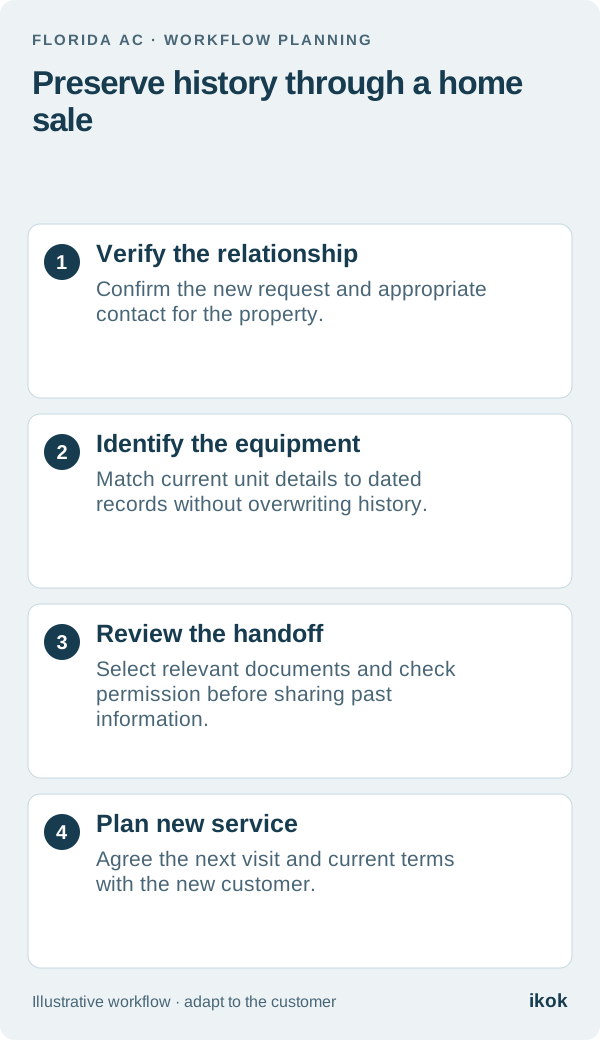
The office verifies the service address and establishes the new caller's relationship to the property using its normal process. It records the current request without assuming the buyer received the former owner's documents or agreed to the same service terms.
Before the visit, the office checks which equipment identifiers are reliable and which documents can appropriately be used or shared. The technician will confirm what is actually installed now.
Make three separate record decisions
Use this review to avoid treating every old record as either disposable or automatically transferable. Follow your company's data-access and retention process when making the actual changes.
| Record | Preserve clearly | Review before the next action |
|---|---|---|
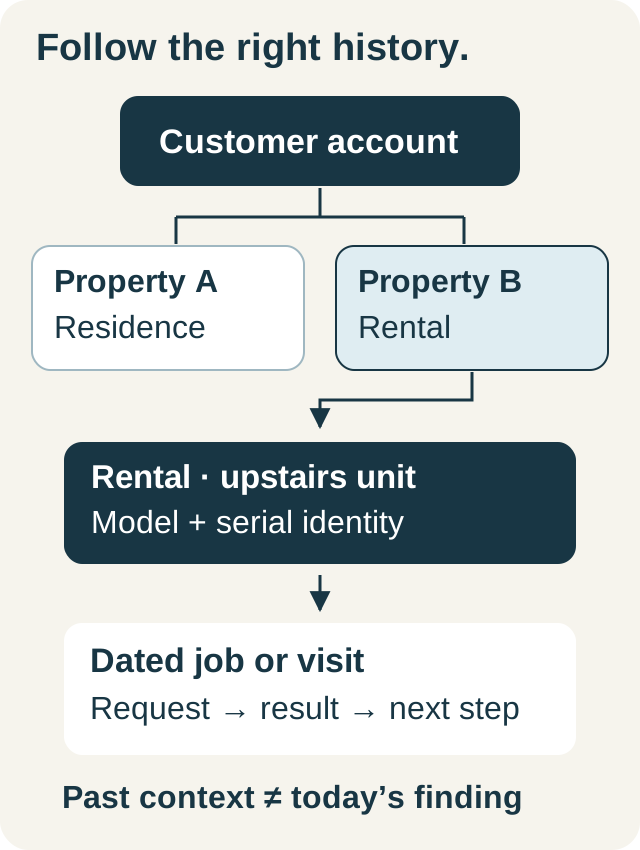
| Historical job | Original date, customer relationship and recorded work | Which details are relevant to today's service? |
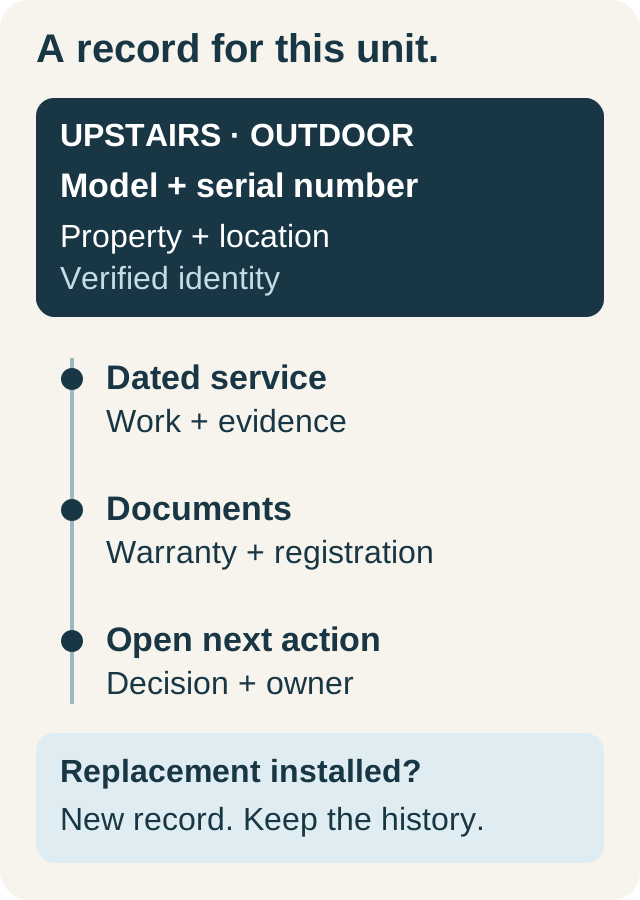
| Equipment identity | Model, serial, location and dated evidence | Does the currently installed unit match? |
| Warranty document | Its source and the equipment it describes | What do the applicable terms actually cover? |
| Maintenance agreement | Its accepted scope, parties and term | Is a new agreement or approved change needed? |
| Former-owner communication | Its original audience and context | Is there permission and a reason to disclose it? |
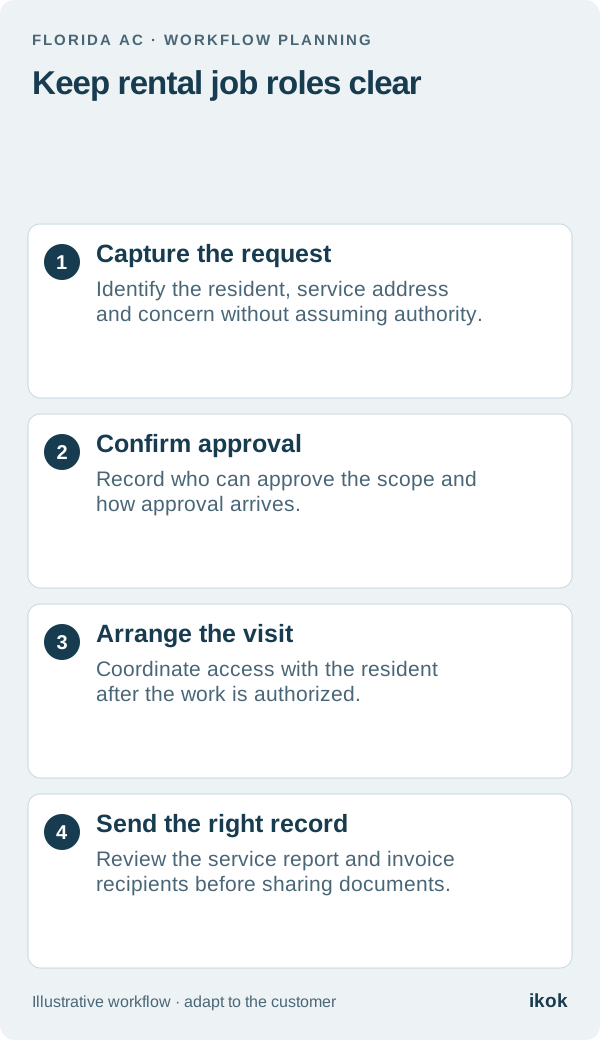
| New service request | New contact, purpose and agreed scope | Who approves the visit and receives its documents? |
Do not use the former customer's payment details, communication permissions or automatic payment setup for the new customer. Establish the new relationship through the appropriate processes instead.
Check warranty questions against the real documents
A saved warranty expiry date is a useful reference, not a coverage decision. Ask the responsible person to review the relevant manufacturer documents, equipment identity and any applicable registration or ownership conditions before describing coverage.
The same distinction applies to an old recommendation. It describes what was recorded at that time. It does not establish the present condition of the equipment or the correct work today. Give the technician the relevant history as context and let the current assessment produce its own findings.
The equipment service records guide explains how separate unit identities and dated evidence keep this history meaningful.
Give the new customer a useful next step
After the visit, share a reviewed report of the work actually performed and the recommendations discussed. If maintenance is appropriate, explain the new proposed scope and visit schedule rather than referring vaguely to the previous owner's plan.
Set a clear owner for any unanswered document or warranty question. A statement such as “the office will review the available certificate and respond” is more useful than implying that historical records prove current coverage. Record that response when it is made so the next employee does not repeat an incomplete answer.
Test the record change with fictional data
In an IKOK equipment workflow, demonstrate customer and property context, model and serial details, installation and warranty dates, and attached documents. Then ask how the available workflow handles a change in customer relationship while preserving earlier work.
Do not assume a universal one-click ownership transfer. Use the customer-history framework to review the proposed handling of records, document access and future visits before applying it to a real property.