Find out what “lapsed” means in this record
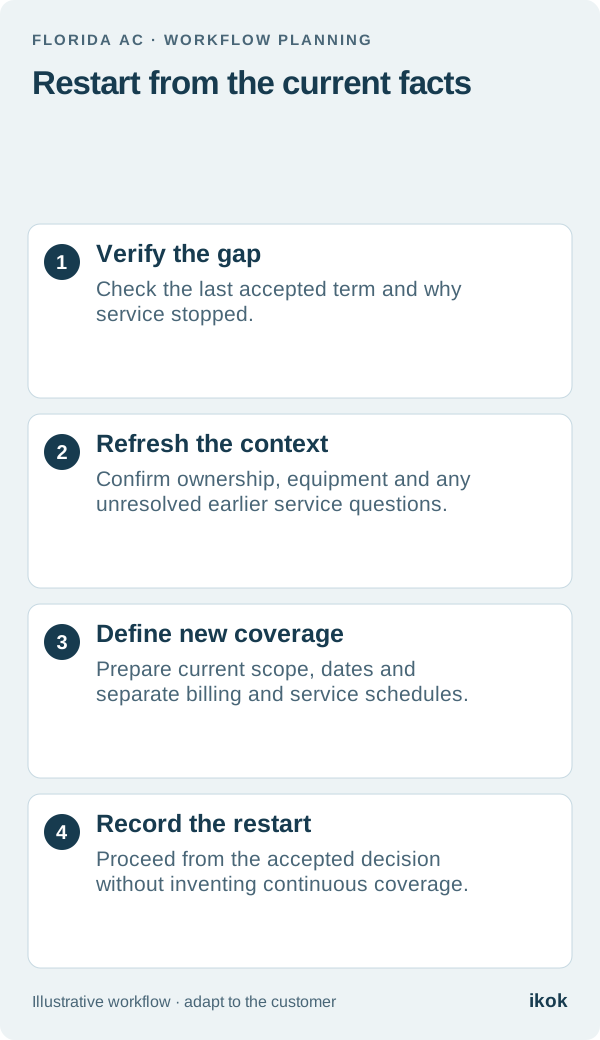
A maintenance relationship can stop for different reasons: a customer moved, declined the next term, changed providers, or simply did not complete a new agreement. A missing appointment can also be mistaken for a lapse even though service is still owed. Check the accepted dates and history before deciding which situation you have.
In a fictional Florida service office, Sam asks about restarting maintenance after a gap. The old record lists one system and an expired term. The employee receiving the call does not reactivate billing or assume the same price. She confirms the property and asks what has changed since the last visit.
Use the gap review to choose the next conversation
The reason for the gap should change your response. An unresolved service complaint needs personal handling. A former owner should not receive an offer for someone else's home. A customer who wants a current plan needs clear new terms rather than a lecture about missed service.
| What you find | Appropriate next step |
|---|---|
| Current service is still owed | Resolve that obligation before calling it a new sale |
| Customer previously declined | Respect the decision; use a new customer request or other appropriate reason to revisit |
| Ownership or contact changed | Verify the record and authorized contact first |
| Equipment was replaced | Review the new equipment and proposed coverage |
| Customer requests a restart | Discuss current condition, scope and a new start date |
| History is incomplete | Mark the uncertainty and assign a record review |
This review can use customer history and tags, but a tag alone does not prove the customer is eligible for a message, a plan or a charge.
Reconfirm the system and the requested service
Sam explains that the outdoor unit was replaced during the gap. The old equipment history is still useful evidence of earlier work, but it should not be presented as service on the replacement. Confirm the current equipment identity and what Sam wants the company to do next.
Your qualified team decides whether a visit or additional assessment is needed before a new scope can be agreed. The office should not diagnose the system from its age or the length of the lapse. Record the assessment decision, who will make it and whether the customer has approved the proposed next step. Explain any separate service charge before work is arranged.
Describe a fresh term without rewriting the past
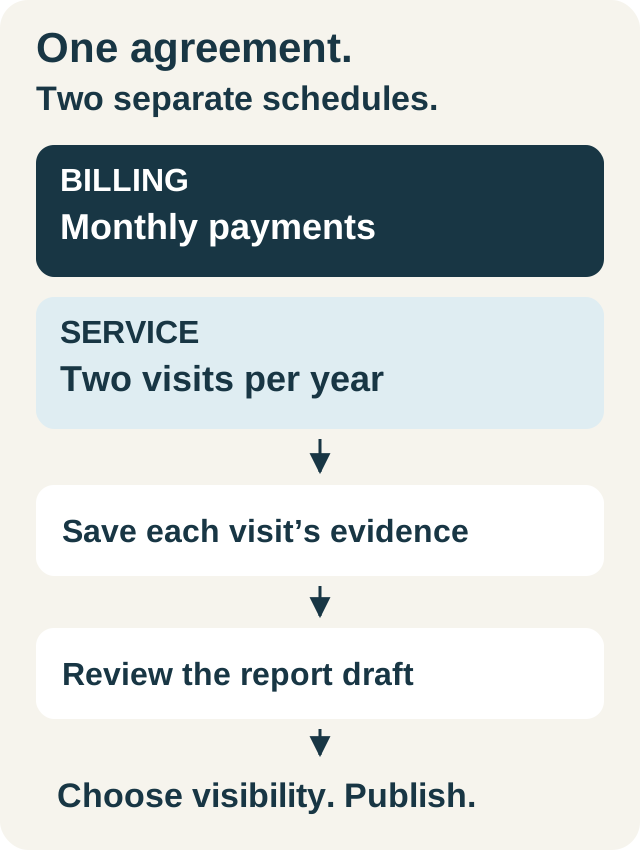
Prepare the current offer with its covered units, included tasks, exclusions, duration and price. State its proposed start date and identify the visit schedule independently from payment timing. Do not describe the gap as covered unless the actual agreed terms support that statement.
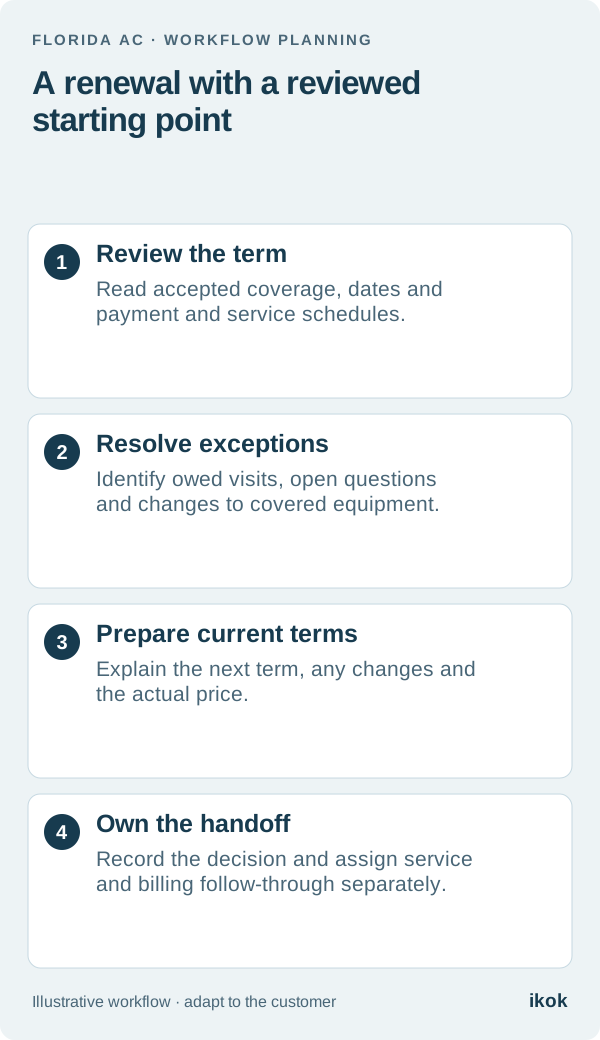
For Sam, the proposal might cover the newly confirmed equipment for a future term. It should not silently recreate missed appointments or backdate an annual charge. Keep the old agreement and completed visit records available as history, with the new decision recorded separately. The maintenance agreement guide explains the relationship between accepted terms and future execution.
Keep outreach relevant and limited
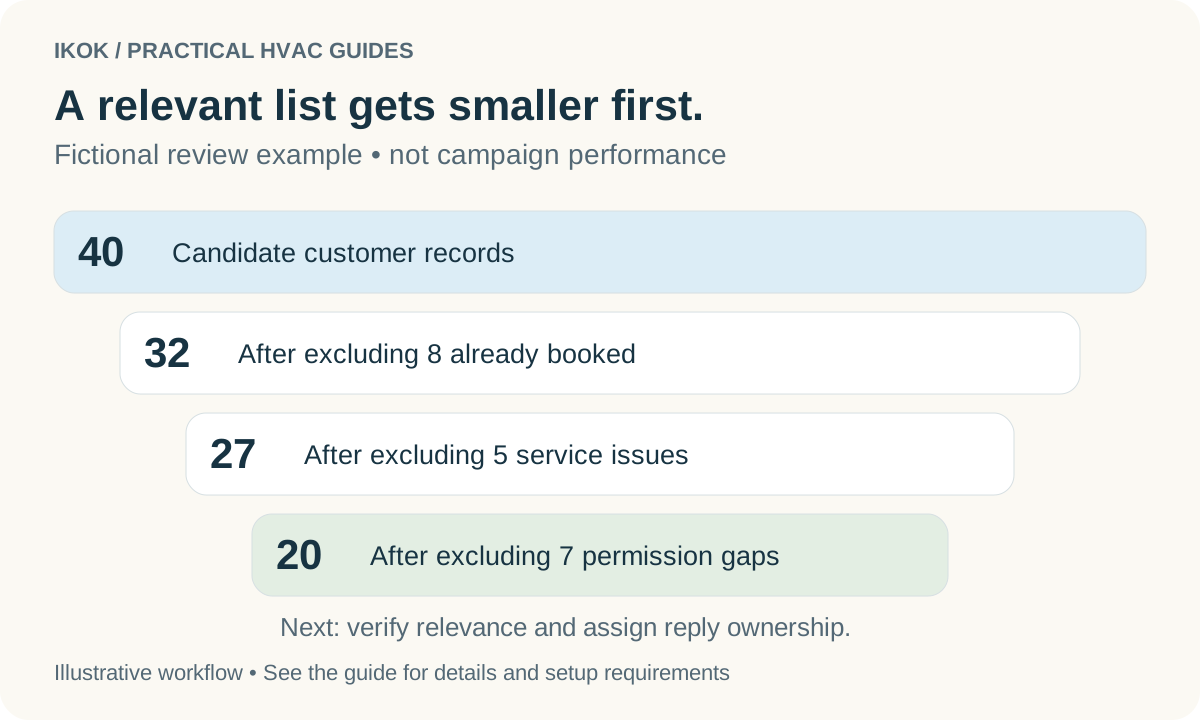
If the customer initiates the conversation, respond to that request. If your company is considering outreach, first review the purpose, contact preference, suitable permission and recent history. An old phone number is not blanket permission for promotional texting. Use your company's reviewed communication process and give replies an owner.
A message for a customer who asked you to reconnect could say: “You asked us to revisit maintenance this month. We can review the current equipment and the plan options for a new term. Has anything changed at the property since we last spoke?” Do not send it to someone who made no such request. The broader customer reactivation guide provides a candidate-list review.
Test the restart with one example in IKOK
Ask to find the old customer and equipment history, record the changed system, prepare the new maintenance proposal and inspect the accepted service and billing schedules. Confirm how your setup retains historical visits while managing the new plan.
Finish with a simple handoff: who accepted what, when coverage starts, which equipment is included and who books the first visit. A restart has succeeded operationally when the office can answer those questions, not merely when an account has been labeled active again.