A maintenance agreement creates several promises at once: which equipment is covered, what work is included, when the customer pays, and when your team returns. Managing those promises as a single “active plan” label makes exceptions difficult to see. A paid account can still have an unscheduled visit; a completed visit can still have an unresolved recommendation.
Use three connected records: the accepted agreement, the service schedule, and the evidence from each visit. Give each a clear owner and review the exceptions together.
Define the agreement before scheduling work
Before asking a customer to accept, make the operating terms understandable without a sales conversation. Confirm the property, covered units, visit frequency, billing frequency, included tasks, and work that requires a separate estimate. Record the contract duration and the renewal and cancellation terms your company has approved.
| Agreement detail | Question to settle |
|---|---|
| Covered equipment | Which specific units at which property are included? |
| Service frequency | How often are visits due, and how will dates be arranged? |
| Billing frequency | When is the agreed charge collected? |
| Visit scope | What is included, and what needs separate authorization? |
| Exceptions | Who handles access problems, replacement equipment, or a missed visit? |
Do not use a generic checklist as a substitute for the agreed scope. Select tasks for the equipment, manufacturer guidance, season, and your qualified team's procedures. ENERGY STAR's maintenance checklist is useful background on professional maintenance; it does not define every system's service requirements or your company's contract.
Worked example: one payment schedule, two visits
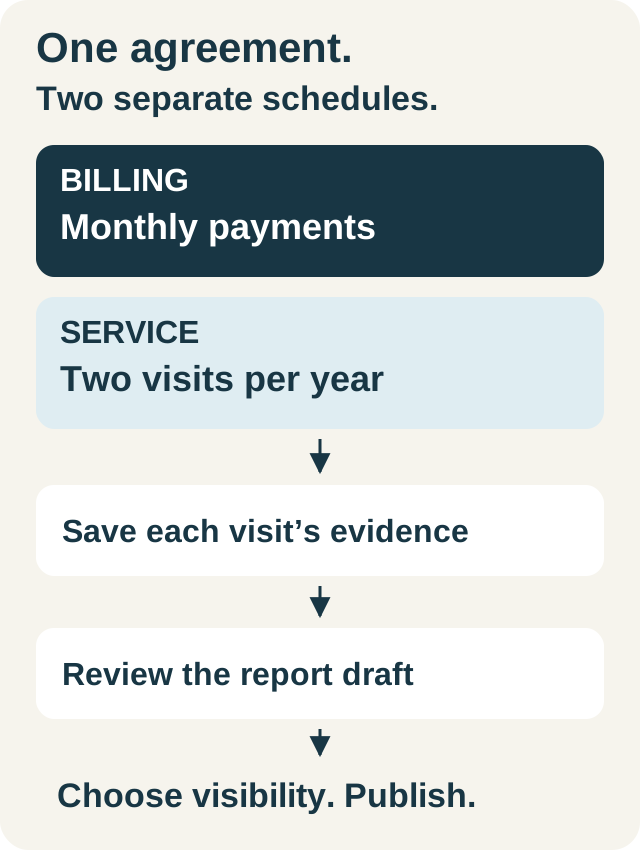
Consider a fictional customer, Morgan, with two covered units at one property. The agreement specifies monthly billing and two service visits during the year. The office records those as separate schedules. Twelve payment dates do not create twelve visits, and finishing the spring visit does not change the agreed monthly charge.
The spring appointment is moved because the customer cannot provide access. The dispatcher records the reason and a new service date. The billing question is reviewed against the accepted terms, rather than silently changing the payment schedule because the appointment moved.
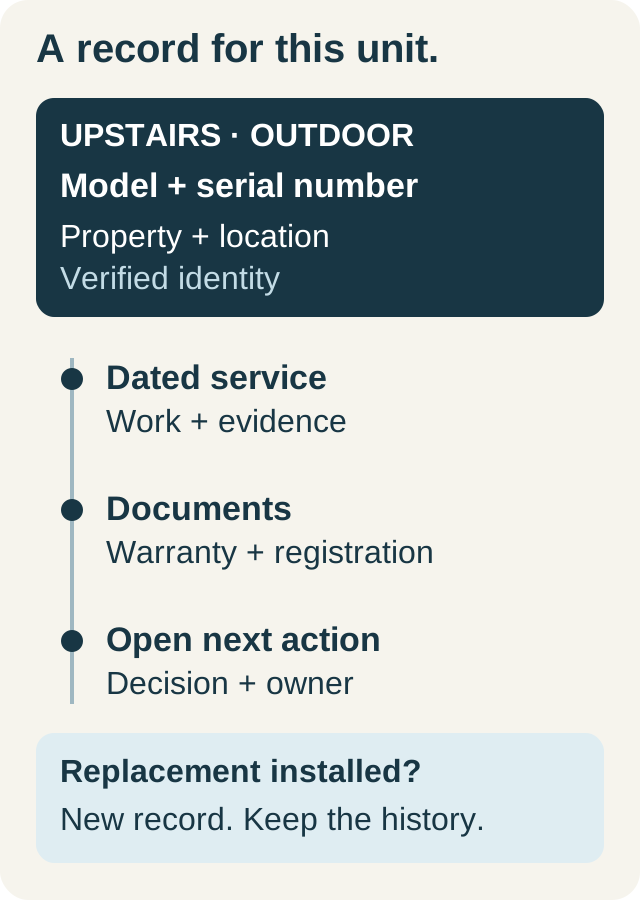
Before the autumn visit, Morgan replaces one unit. The office identifies the replacement and checks whether the agreement needs an approved change. The technician reviews the equipment assignment for the upcoming visit. The spring record still describes the original unit; it is not rewritten to look as though the replacement had been serviced earlier.
Give the office a visit-ready checklist
Review these items before assigning the technician:
- Match the appointment to the correct customer, property, and agreement.
- Confirm which covered units are expected on this visit.
- Check the previous report for unresolved recommendations and access restrictions.
- Select the applicable tasks and required evidence for this occurrence.
- Confirm the arrival window with the customer and record any special arrangements.
- Name the office owner for rescheduling, missing information, and follow-up estimates.
Keep payment exceptions visible to the people who manage the agreement. A technician should not have to infer the customer's contract status from a calendar color or decide payment policy while standing at the property.
Record the work once, then review the customer report
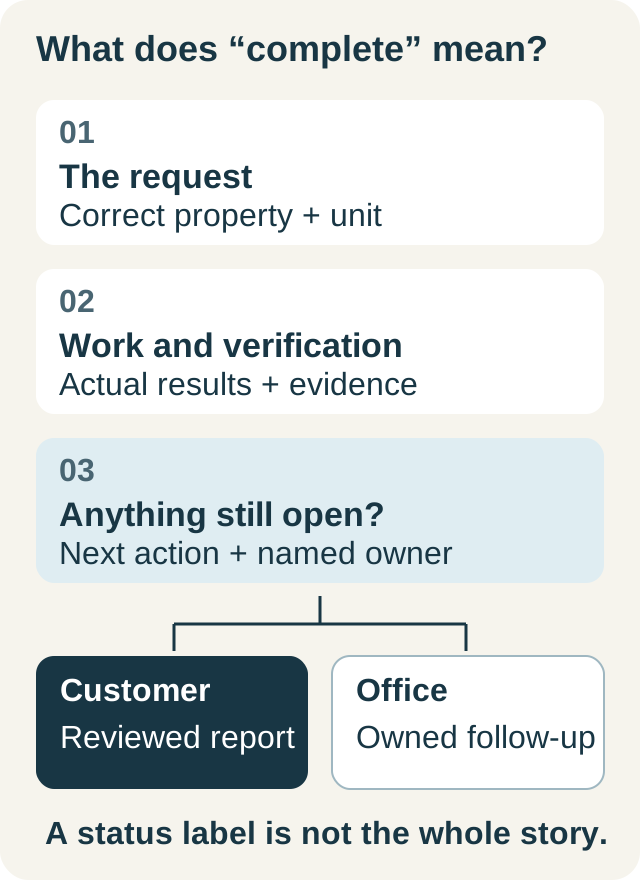
During the visit, identify the unit before entering results. Record the actual task outcome, relevant readings with units, evidence photos, and recommendations. An unchecked item is not a pass. If a task was not performed or could not be assessed, record that distinction and the reason.
In IKOK, saved maintenance execution supplies a report draft with equipment, work and checks, recorded readings, recommendations, notes, and photos. This keeps the report connected to the visit instead of requiring a second version of the checklist.
Review the draft before sharing. Check that each finding belongs to the right unit, that the wording describes what was actually observed, and that client-visible sections contain only material intended for the customer. Internal notes remain a separate choice. Publish the reviewed report; later edits to the working record do not silently rewrite the previously published report.
Use IKOK to preserve the accepted plan
IKOK's maintenance proposal workflow records accepted terms, including separate billing and service frequencies, covered-system count, price, and duration. Package pricing can distinguish a first covered unit from additional units. Review the displayed agreement total rather than multiplying an old catalog rate by a new unit count.
The visit execution workflow also retains its saved equipment assignment. When equipment changes, review the replacement before recording new work. This preserves a meaningful history across renewals and replacements. See the equipment service record guide for the identity fields that make this possible.
Customize the package and the report around your service
Use your own package description, included tasks, benefits, and reviewed agreement terms. For Morgan's fictional plan, the customer-facing scope might identify the two covered units, two planned visits, and work requiring a separately approved estimate. The billing line states the monthly charge independently. These are example operating details, not ready-to-use legal terms.
Then choose a reusable report layout for the package. One practical layout has “Equipment serviced,” “Work and checks,” “Recorded findings,” and “Recommendations” visible to the client, with “Technician notes” kept internal. Adjust titles, order, included sections, and visibility to suit your workflow. The saved visit supplies the content; your team still reviews what gets published. Confirm the configuration and plan options during your demo.
Review exceptions, not just completed appointments
At a regular office review, look for visits due but not booked, appointments moved without a new date, incomplete execution, report drafts awaiting review, and recommendations without an owner. Keep billing exceptions on a separate list so a successful payment never stands in for a delivered visit.
For each exception, write one next action and one responsible person. “Office to offer two appointment windows” is useful; “follow up” leaves the next dispatcher guessing. The closeout guide provides a handoff format for unresolved work.
Request an IKOK walkthrough using one of your maintenance agreements. Ask us to show its accepted terms, visit assignment, saved execution, and reviewed report as one continuous workflow.
A few practical questions
Before you put it to work
Does monthly billing mean a technician visits every month?
No. Billing frequency describes when the customer pays; service frequency describes when visits are due. State both independently in the accepted agreement.
Does completing a maintenance visit automatically publish its customer report?
IKOK can build a report draft from saved maintenance execution. Review the wording, included evidence, and client or internal visibility before publishing and sharing it.
What should change when covered equipment is replaced?
Confirm the replacement equipment and future coverage, then review its assignment to the visit. Preserve the identity and results of equipment recorded on earlier visits.