Give the return visit a clear reason
A job waiting for a part needs more than a note saying “come back.” Your office needs the equipment identity, the approved work, the supply dependency and the person responsible for the next update. Without those connections, a part can arrive while the customer remains uninformed, or a technician can be scheduled before the repair is ready.
For a small Florida AC team, the useful improvement is a shared readiness check. It helps the office distinguish a supplier update from a customer promise and gives the technician a visit that can begin with the right context.
Follow a fictional repair through the waiting period
Suppose a technician assesses a system at a Tampa home. The proposed repair needs a specific part, and the customer approves the documented scope. The supplier gives an expected delivery day, but the part has not yet been received or checked.
The office tells the customer when it expects to provide the next update. It does not turn the supplier's estimate into an unconditional service appointment. A coordinator owns the supply check, while the technician records the unit identification and the work needed on the return.
When the delivery arrives, the team verifies the relevant part information before confirming the trip. If the expected item is missing or different, the office updates the customer and the internal plan together.
Use a dependency board with evidence
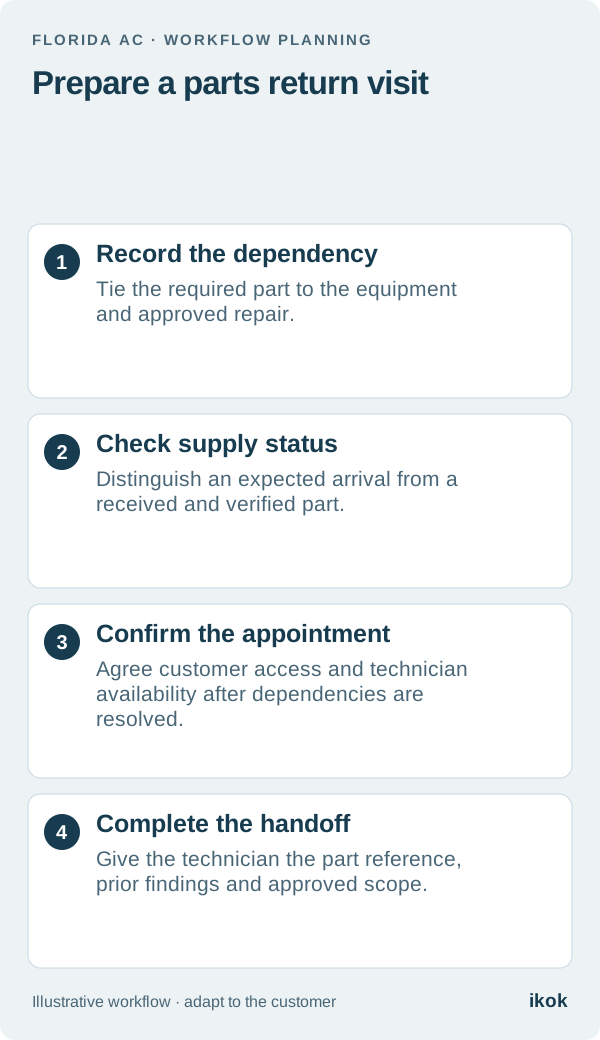
The following board is an operating worksheet. Your team can maintain it through the available records and agreed office process; it is not a claim that IKOK automatically purchases parts or synchronizes supplier inventory.
| Checkpoint | Evidence to record | Action if unresolved |
|---|---|---|
| Equipment identified | Correct property, unit and verified identifiers | Ask the technician to resolve the mismatch |
| Work approved | Scope, customer decision and any open question | Obtain the missing decision before proceeding |
| Supply expected | Supplier reference and latest stated timing | Set the next supply review; avoid a firm promise |
| Part received | Relevant item and quantity checked | Resolve the discrepancy before dispatch |
| Visit arranged | Technician availability and customer access | Offer and agree a workable window |
| Technician briefed | Prior findings, approved work and part reference | Complete the handoff before release |
Give every unresolved row a person and a next review time. A status is useful when it explains who acts next, not when it merely changes the color of a job on a screen.
Keep waiting work separate from completed work
Record what happened on the first visit without making the entire repair appear complete. A completed assessment, an approved quote and a completed repair are different events. Preserve the first visit's findings and record the return work against its actual date.
If the customer changes the scope or declines the return, record that decision and follow your agreed process for outstanding parts and charges. Do not silently change an accepted price or treat a supplier update as new customer authorization.
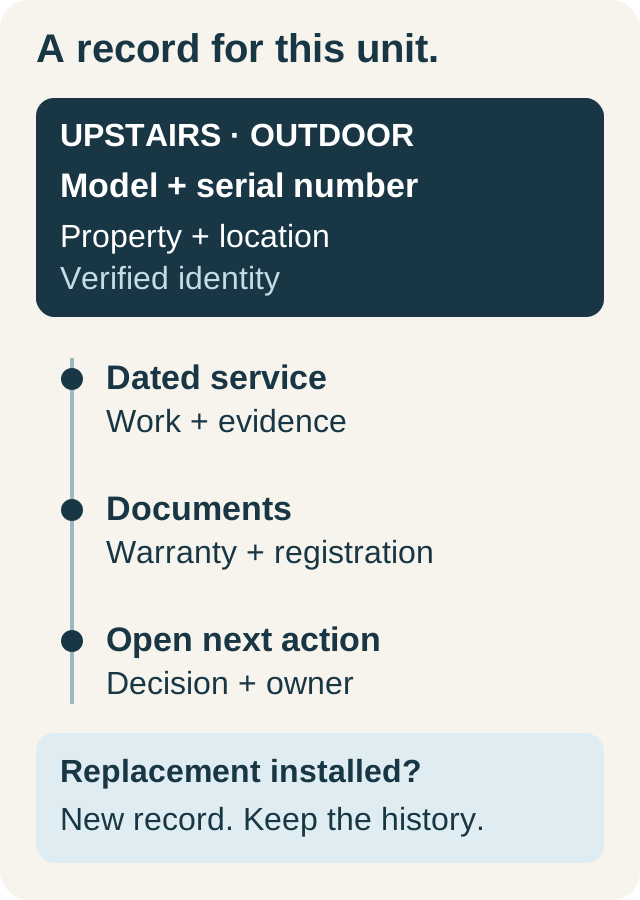
The equipment record should still identify the unit involved, especially at properties with multiple systems or a recent replacement.
Write the next update before the customer asks
Keep the wording tied to what is known. For example: “Your part is expected Thursday. We will check its arrival and contact you to agree a return visit.” Once checked: “The required part has arrived. Can we confirm access for the proposed Friday window?” These are fictional messages, not promises your team should send without verifying the facts.
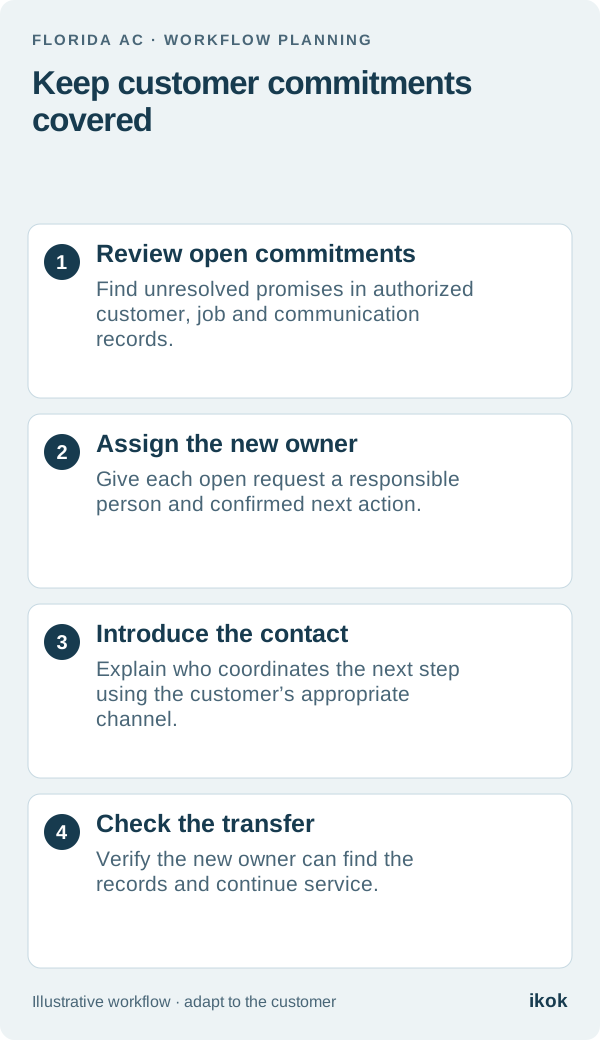
Use the customer's appropriate preferred communication channel. If a date moves, tell the customer what changed and when the next update will happen. The office should own that commitment even when the supplier cannot provide certainty.
Demonstrate the return trip in IKOK
Use IKOK's scheduling and job context to connect the original customer, property, equipment, quote and planned return. Ask a second staff member to locate the approved scope and next action without calling the original technician.
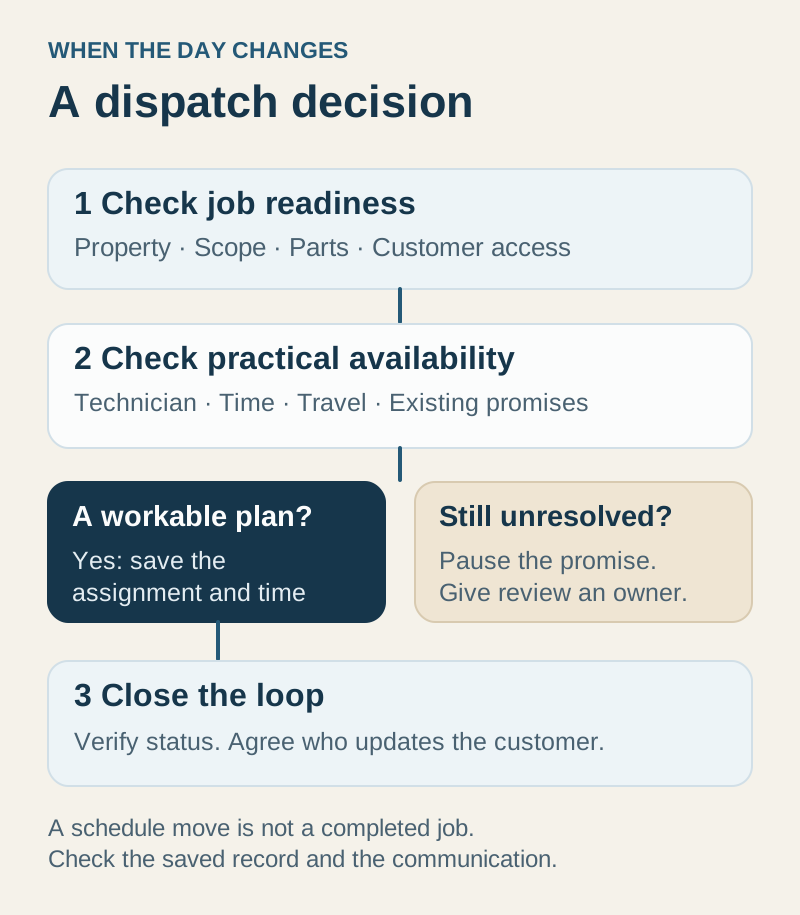
Then move the return appointment and check the updated assignment. This extends the dispatch workflow with a specific rule: confirm the dependencies before committing the truck.