Transfer the customer commitment, not just the appointment
When a technician leaves your Florida AC company or moves into a different role, the office needs to establish who owns each unfinished customer request. Reassigning tomorrow's appointment is one step. A promised callback, an unanswered equipment question or a repair waiting for a part may sit outside that appointment.
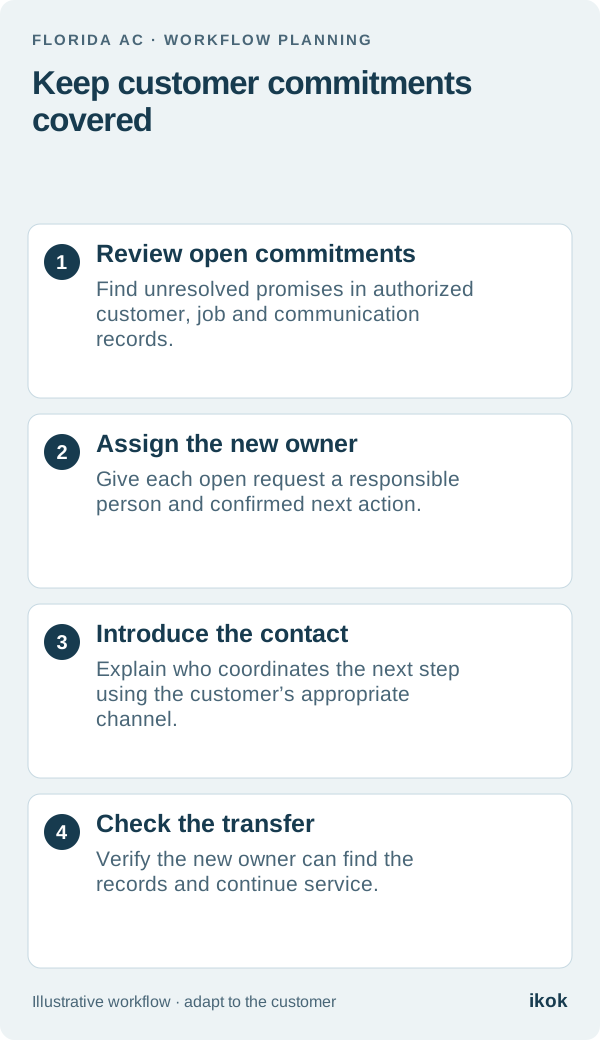
Start with authorized company records and make a short transfer list. Preserve the history of completed work while identifying the promises that still need attention. Customers should know where their request stands without needing to understand an internal staffing change.
Review a fictional change in responsibility
Imagine a Sarasota AC company changes the technician responsible for several repeat customers. The office finds three different situations: a completed maintenance visit with no open request, a customer waiting for a replacement-proposal answer and a repair awaiting an ordered part.
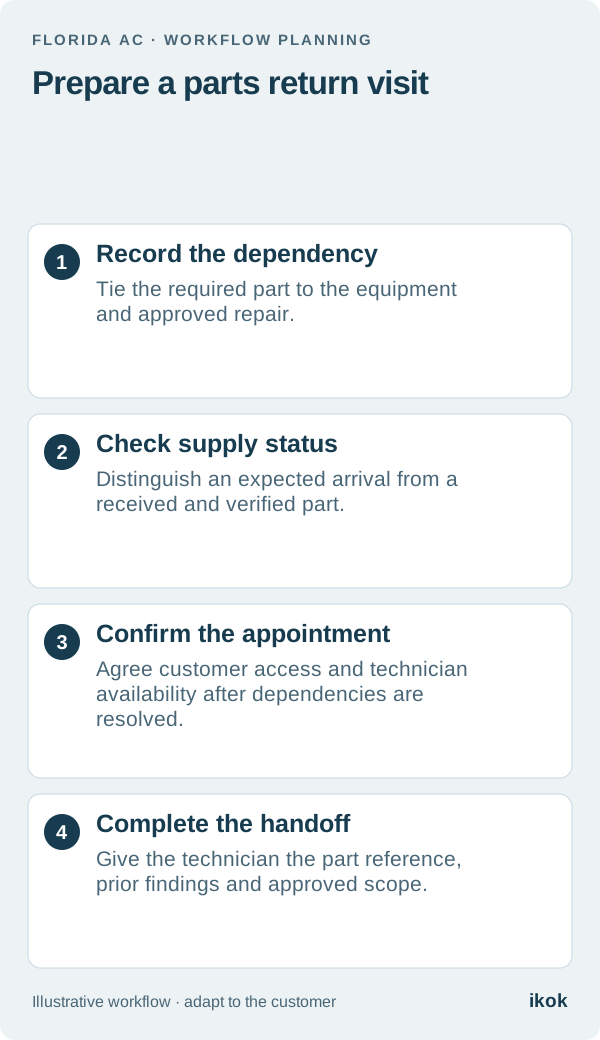
The completed visit remains a historical record. The unanswered proposal receives an office owner who reviews the question before replying. The pending repair needs both a supply check and a new technician assignment; it is not ready merely because someone is now available.
The team also finds an old access instruction. Rather than assuming it remains valid, the coordinator verifies the arrangement before the next visit. Unclear information is marked for confirmation, not filled in from memory.
Build a transfer list with acceptance checks
Use this worksheet to review the open work. Record the actual customer and job references in your authorized workspace; the examples below contain no real customer or employee information.
| Item to review | What the new owner needs | When the transfer is accepted |
|---|---|---|
| Scheduled visit | Correct property, equipment, scope and current access arrangement | Assigned technician can find and understand the visit |
| Promised customer update | Recorded question, promised timing and preferred contact channel | Office owner confirms the next response and review time |
| Open proposal | Current document, customer questions and any recorded decision | Responsible person distinguishes pending from approved work |
| Repair awaiting a part | Approved scope, supply reference and latest confirmed status | Owner checks supply before arranging the return visit |
| Maintenance obligation | Agreed service and visits still due | Coordinator confirms which commitments remain outstanding |
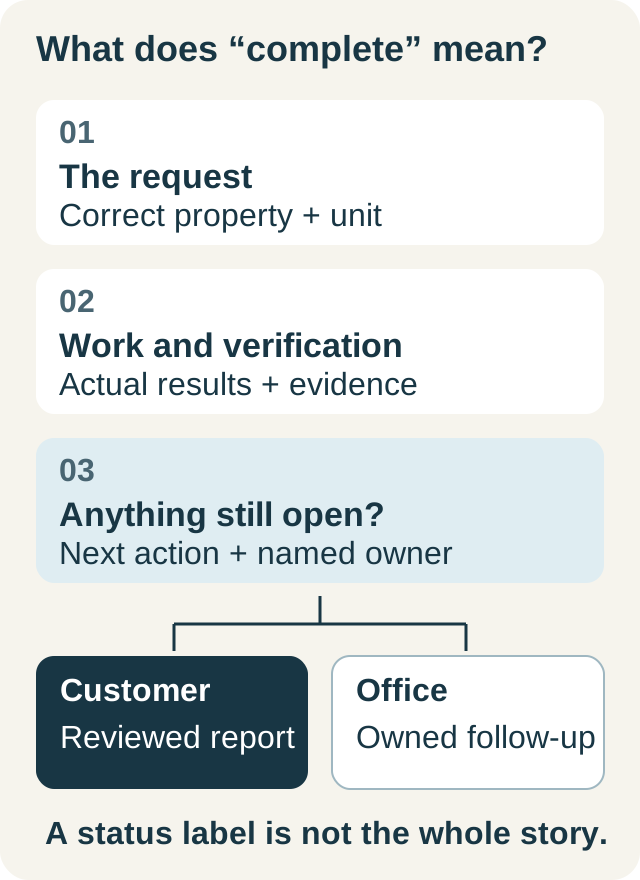
| Completed service | Dated evidence and reviewed report, where available | History remains intact without creating unnecessary new work |
For each unresolved item, name a primary owner and the next action. Identify who covers it if that person is unavailable. The parts return-visit workflow provides a detailed readiness check for the supply-dependent case.
Introduce the next contact around the customer's request
Use the appropriate business channel and the customer's recorded preferences. Explain the useful change: who is coordinating the open request and what happens next. There is no need to include personal information about the former technician or explain private staffing circumstances.
A fictional service update could read: “Hello from the service office. We are coordinating your question about the proposal from your last visit. We will review the recorded details and email your update on Thursday. Please reply if your preferred contact method has changed.” Send it only when the underlying request and timing are confirmed.
If the customer mentions an undocumented promise, record their account accurately and arrange a review. Do not dismiss it, invent evidence of approval or commit to a price or date before the responsible person checks the facts.
Verify continuity after the reassignment
Ask the new owner to locate the relevant records and explain the next step. A name on a list does not prove that the person can access the information or has accepted responsibility. Have the appropriate administrator review account access and permissions separately; this worksheet does not perform access changes.
Check the first follow-through: was the promised response made, did the customer answer, and is any visit now confirmed? Keep these outcomes separate. A sent introduction does not complete a repair, accept a proposal or fulfill an outstanding maintenance visit. Review remaining questions until each has a clear outcome or a continuing owner.
Test customer continuity in IKOK
IKOK's customer and service workspace connects customer, property, equipment, job and document context. Demonstrate how an authorized replacement owner finds the current record, distinguishes completed work from open commitments and continues the agreed next step.
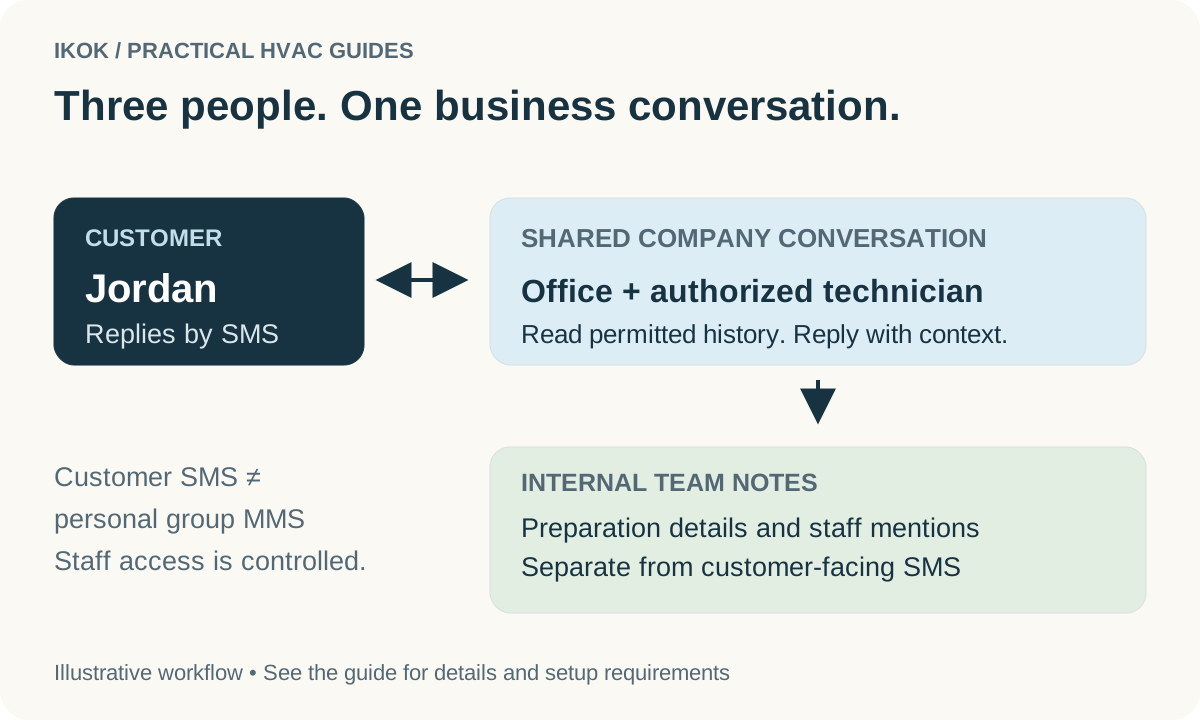
The shared SMS inbox can support responsibility assignment, permitted conversation history and internal notes for authorized staff. Sending requires the appropriate activation, consent, permissions and billing setup. Use the records available to your team and confirm the workflow; do not assume a staffing change automatically transfers every conversation or changes every account permission.