Start after the repair has a clear outcome
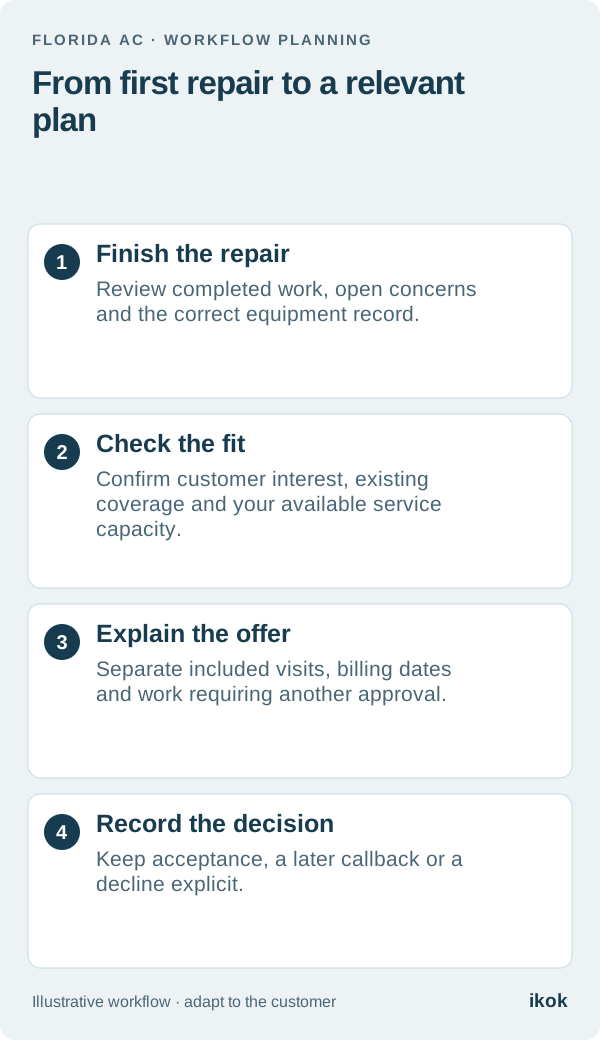
A maintenance conversation works best when the customer understands the repair they just received. Review the completed work, explain anything still unresolved, and make the repair invoice understandable before introducing another service. An open complaint or unexplained charge needs an answer first.
Consider a fictional two-person AC company in Florida. Its technician finishes a repair for Maya, a first-time customer with one documented system. Maya asks how future service visits work. That question creates a useful opening for an explanation; it does not mean she has enrolled in anything. The office records her question and offers to send the actual plan details.
Check whether the offer fits this customer
Before reusing a maintenance description, check the equipment, property and customer's situation. The system may already have coverage through another agreement. The customer may rent the property and need an owner's decision. Your team may also have limited capacity for the service windows being discussed.
Use this short offer-readiness sheet rather than treating every paid repair as an automatic sales opportunity:
| Check | Record before sending |
|---|---|
| Equipment | The unit or units the proposed plan would cover |
| Existing arrangement | Any known active plan and who maintains it |
| Customer interest | The actual question or request for information |
| Decision maker | Who can approve the new service arrangement |
| Delivery capacity | Whether the office can support the proposed visits |
| Open issue | Anything that should be resolved before another offer |
A missing answer can mean “clarify first.” It does not have to mean losing the relationship. A clear response tomorrow is more useful than an inaccurate promise today.
Separate the new plan from the finished repair
For Maya, prepare a separate proposal describing covered equipment, included work, exclusions, duration, payment timing and service timing. Explain which parts of the recent repair are already complete and which future visits the new offer would provide. Do not quietly fold a new agreement into a repair approval.
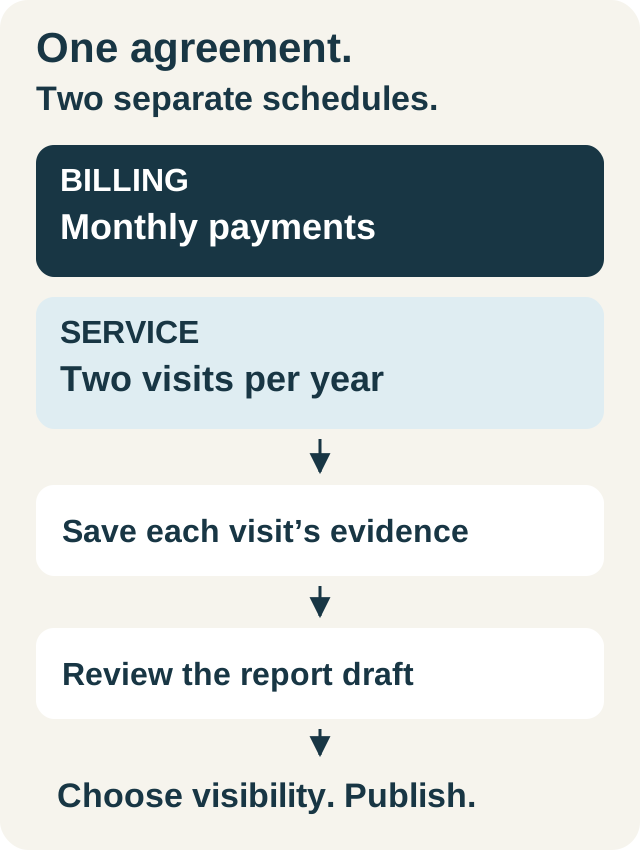
Billing and visits need separate lines. An annual payment can cover more than one planned visit when those are the accepted terms; the number of visits does not determine the number of payments. A recurring charge also requires the appropriate agreed setup and authorization. The maintenance agreement workflow shows how those records remain connected without becoming interchangeable.
Give the customer an easy next decision
A useful introduction might read: “You asked how our maintenance visits work. This proposal lists the equipment, included visits and payment schedule for the plan we discussed. Please review the details, and tell us if you would like to discuss anything before deciding.” Use that wording only when the conversation actually happened.
Keep the next action small and accurate. Maya might request a call, accept the offer, decline, or ask the office to revisit it later. A sent document or an email open is not acceptance. Record a requested callback date if there is one, and use the customer's appropriate preferred communication channel.
Hand an accepted plan to the service schedule
Once the agreed terms are recorded, give the office the covered-unit list and the service obligations. Check the first visit window, access contact and responsibility for booking. Record payment status separately. A plan should not disappear from the service review just because its payment has been collected.
For a decline, record the decision without repeatedly presenting the same offer. For a later conversation, keep the request with an owner. At the end of the week, review pending decisions and accepted plans awaiting scheduling. That is a manageable small-team routine; it does not require sending a campaign to every previous customer.
Make the software demonstration follow the customer
In IKOK, start with the customer, equipment and completed repair context. Ask to prepare the maintenance proposal, review separate billing and service frequencies, then show where an accepted plan's visits are managed. Confirm the configuration and commercial scope for your team.
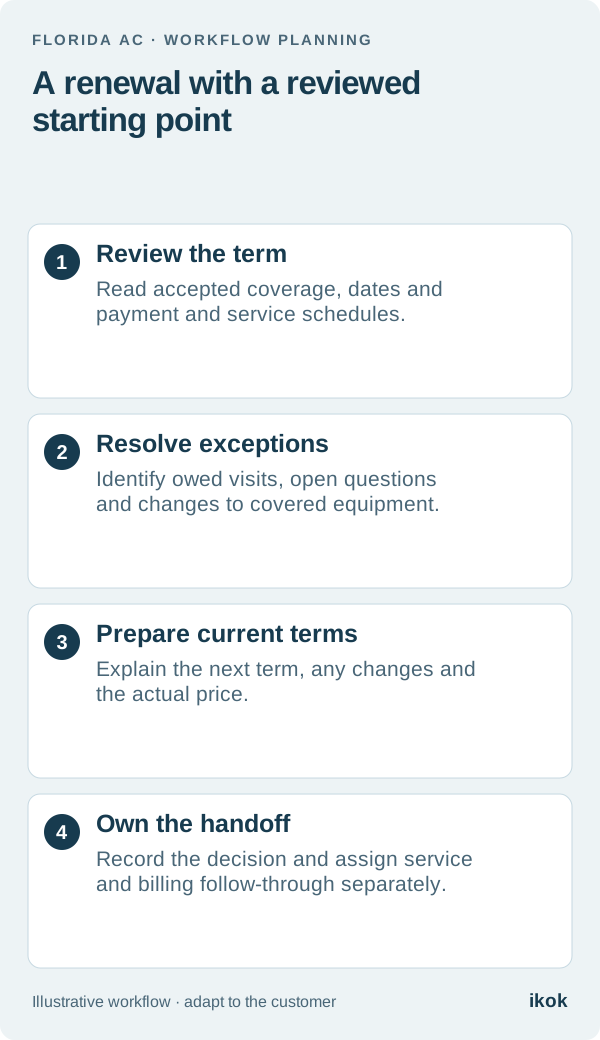
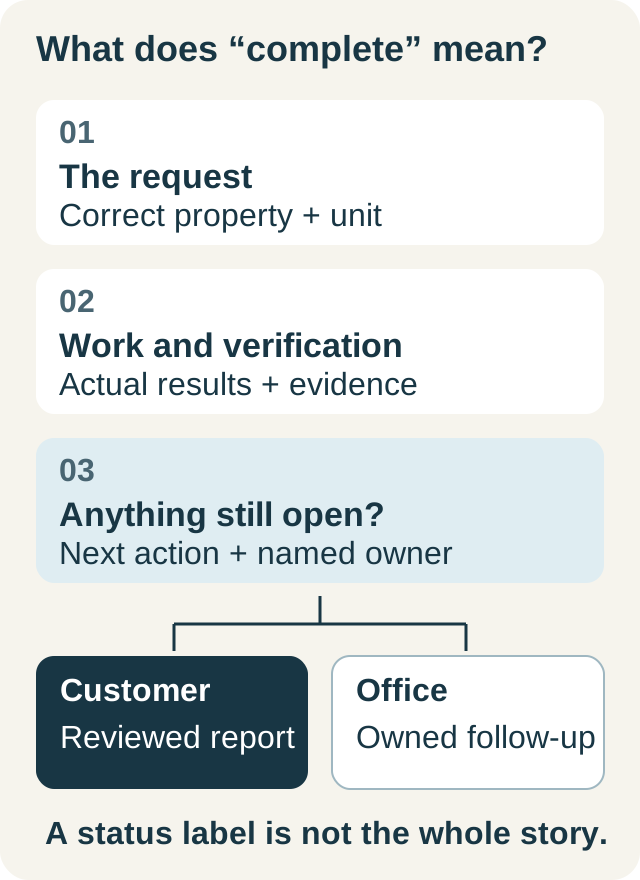
Bring a redacted example of your own repair and plan description. The useful result is a handoff that another employee can understand: what was repaired, what was offered, what the customer decided and what your company now owes. When the term approaches its end, use a separate renewal review.