Decide what “repeat customer” means before counting
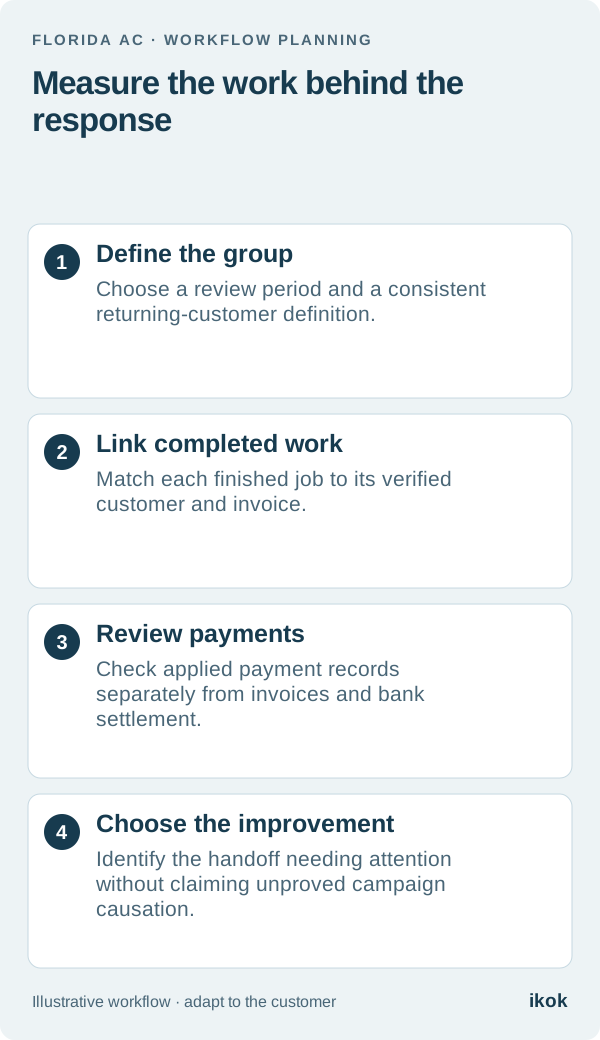
For a small Florida AC company, a useful pilot can start with one review period and a simple definition: a returning customer had a completed job before that period began. Keep that definition stable while reviewing results. A new customer who books two jobs during the period is a different case and can be tracked separately.
Choose the customer account as the unit for this review, then retain property and equipment detail underneath it. Otherwise one owner with two properties may be counted as two newly acquired customers. Check duplicate or uncertain records before using the totals to make a business decision.
Separate the conversation from the completed work
Use different columns for customers reviewed, contacted, replied, requested a conversation, booked and completed work. A delivered email is not a sale. A confirmed appointment can still be canceled, and a completed visit may involve work already owed under an existing agreement.
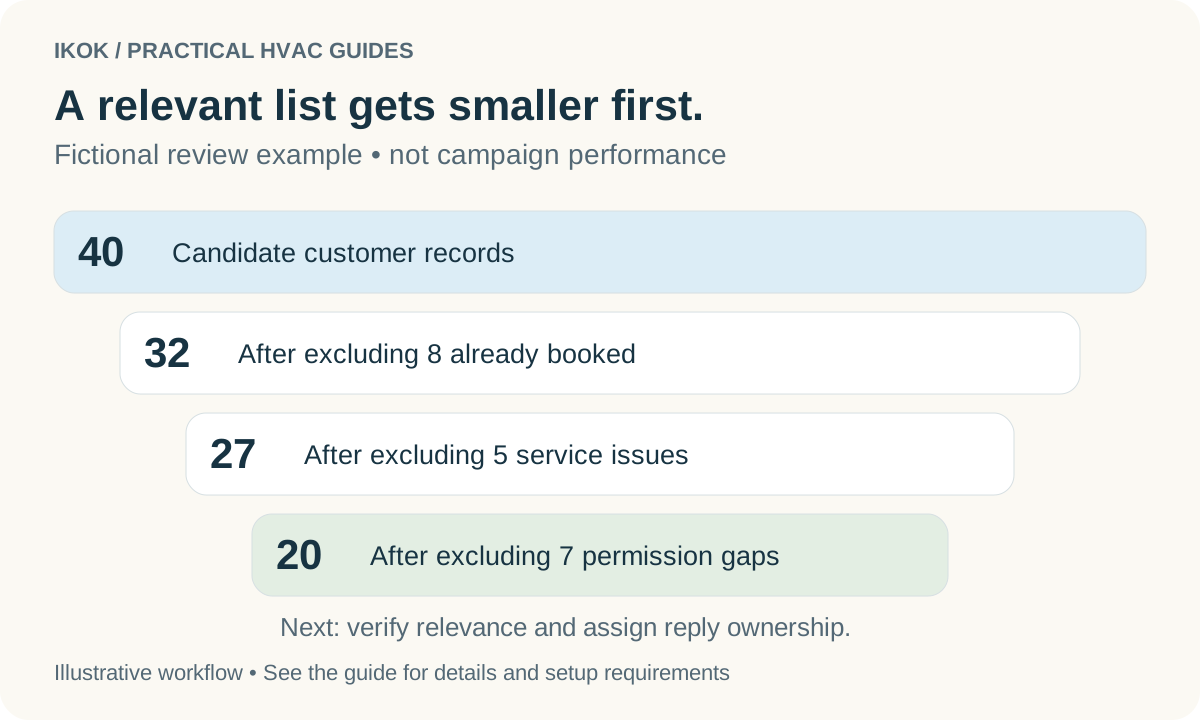
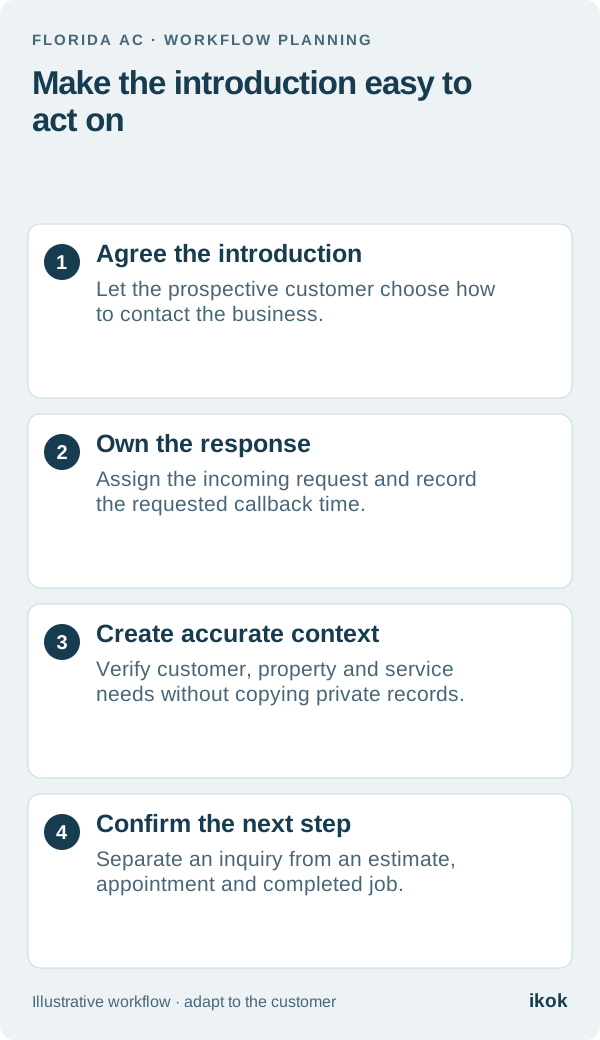
For the follow-up process, record the relevant reason and the customer's response. For the job outcome, inspect the actual work record. The customer reactivation guide explains the eligibility review that comes before contact. This measurement sheet should not turn everyone with an old customer record into an outreach target.
Work through a small fictional ledger
Imagine the office reviews four completed jobs. The following amounts are invented to demonstrate the worksheet; they are not IKOK results, service prices or a forecast. “Payments applied” means the recorded amounts applied to these particular invoices at the review time.
| Job | Customer | Completed work before this period? | Invoice total | Payments applied |
|---|---|---|---|---|
| A-01 | Avery | Yes | $500 | $300 |
| A-02 | Avery | Yes | $200 | $200 |
| J-01 | Jordan | Yes | $300 | $0 |
| M-01 | Morgan | No | $400 | $400 |
Under the chosen definition, the sample has two returning customers and three returning-customer jobs. Their invoices total $1,000, with $500 in applied payment records and $500 remaining. Morgan's job belongs to the new-customer group. Four completed jobs do not mean four returning customers.
Keep invoice, payment and accounting measures distinct
The example shows billed work and applied payments. It does not establish accounting revenue recognition, profitability or bank settlement. Keep the terminology clear and have the bookkeeper define the accounting reports used for financial decisions. Do not count an annual plan payment once for every included service visit.
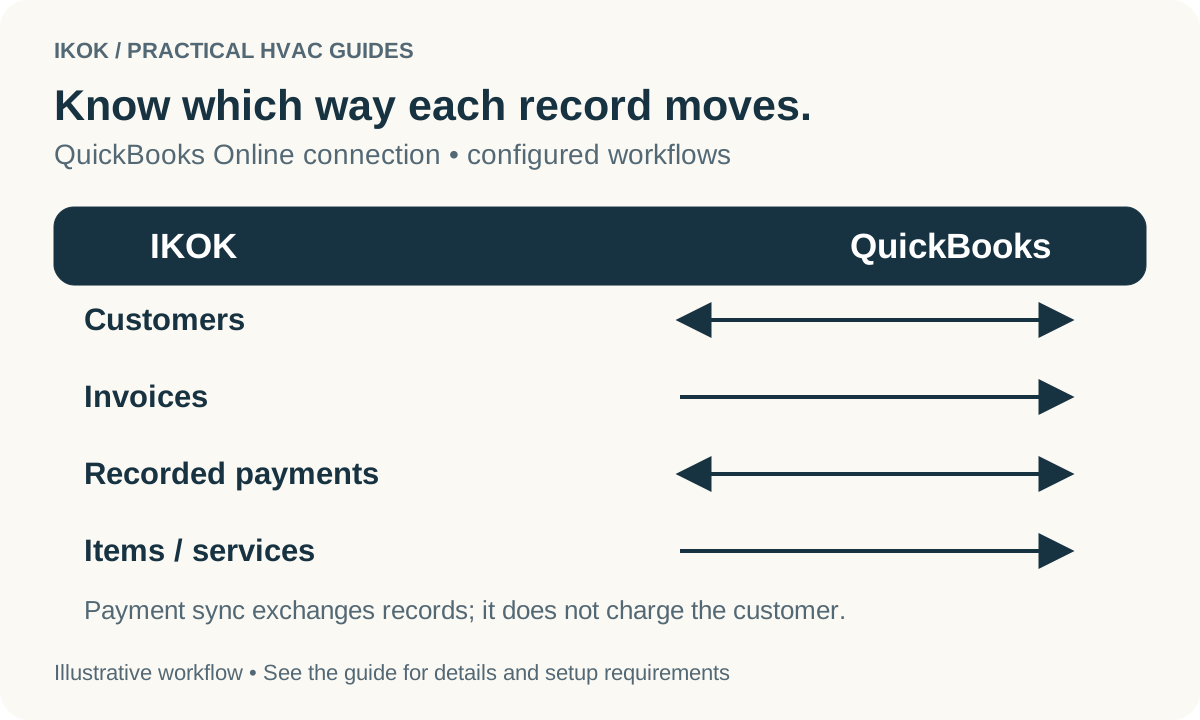
If the review instead asks about cash received during a month, use payment dates and the appropriate records for that different question. Some payments may relate to older invoices. Refunds, credits, disputed amounts and duplicate records need review before a total is relied on. The invoicing and QuickBooks workflow explains why sync, collection and settlement are separate checkpoints.
Find the handoff that needs improvement
Compare stages without pretending the figures prove a cause. If several customers request calls but few receive a response, review ownership and response handling. If bookings happen but visits do not complete, inspect access, parts and scheduling exceptions. If work is completed but invoices remain unreviewed, improve that office handoff.
A completed job after an email does not prove the email caused it. The customer may already have intended to call, or the visit may have been part of an existing agreement. Record the actual source information and leave uncertainty visible. Also review complaints, contact preferences and opt-outs; a process is not successful merely because it creates more activity.
Use IKOK records to support a repeatable review
In a demonstration, start with a returning customer, follow two completed jobs and inspect their invoices and separate payment records. Ask which views or exports are available for your setup and where the office should reconcile exceptions. Keep this manual worksheet alongside the source records unless the demonstrated reporting configuration covers your exact definitions.
Do not assume a native retention dashboard, automatic campaign attribution or profit calculation from this example. Finish the review with one operational improvement, an owner and a date to check it. That makes the next pilot more useful without requiring the team to claim results the evidence cannot support.