Make the introduction comfortable for both people
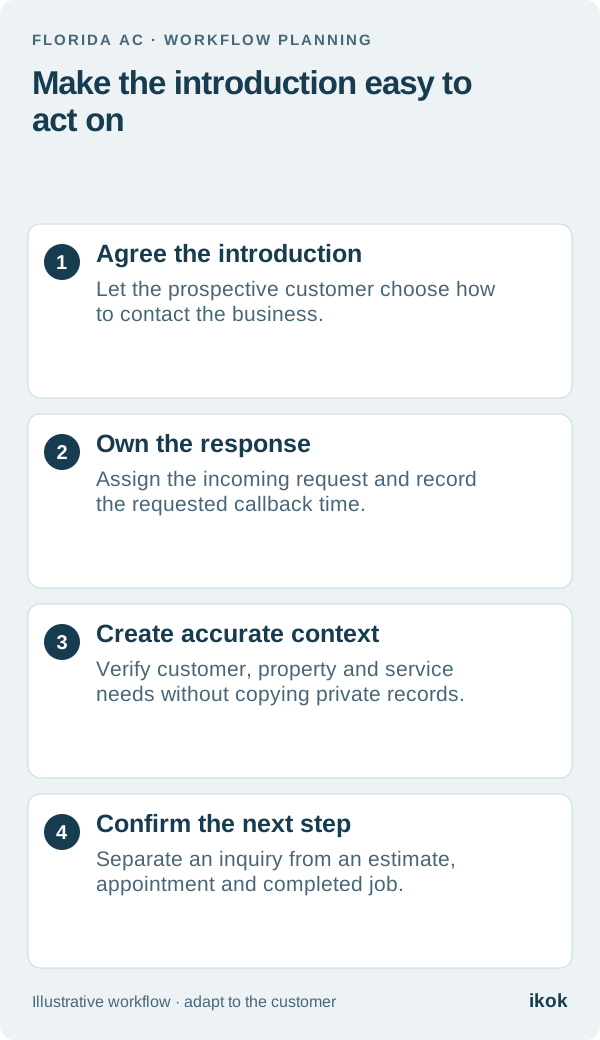
An existing customer may recommend your AC company to a neighbor or colleague. The most useful next step is an introduction the prospective customer understands and wants. Offer a clear business contact or an agreed way to request a callback; do not treat a casually shared number as an instruction to start promotional messaging.
In a fictional Florida example, returning customer Nia tells her neighbor Owen about the company that services her home. Owen contacts the business and says Nia referred him. The office records the source and begins Owen's own intake. Nia's service record does not become the template for his property or the basis for his quote.
Keep a short referral handoff record
A small company can manage this with a clear note or simple review sheet. The goal is to prevent a warm introduction from becoming an ownerless callback, not to create an elaborate referral program before the team needs one.
| Field | Useful entry |
|---|---|
| Introduction source | What the new caller actually reports |
| Prospective customer | Verified name and appropriate contact details |
| Requested service | The caller's description, without an invented diagnosis |
| Service property | The actual address to evaluate for service |
| Next response | The requested callback or agreed information to provide |
| Owner | The employee responsible for that response |
| Current outcome | Inquiry, estimate requested, appointment confirmed or closed |
If a source is unknown, leave it unknown. Do not assign every new customer in a neighborhood to the existing customer who lives there. If your company offers any referral arrangement, confirm its actual terms separately; this workflow assumes no incentive or reward.
Respond from the business with useful context
For Owen, a good response confirms who is calling, why, and the next practical question: “Thanks for contacting us about service at your property. I have your request for an afternoon callback. We can go through the system and appointment options then.” The wording should match the request and the office's real availability.
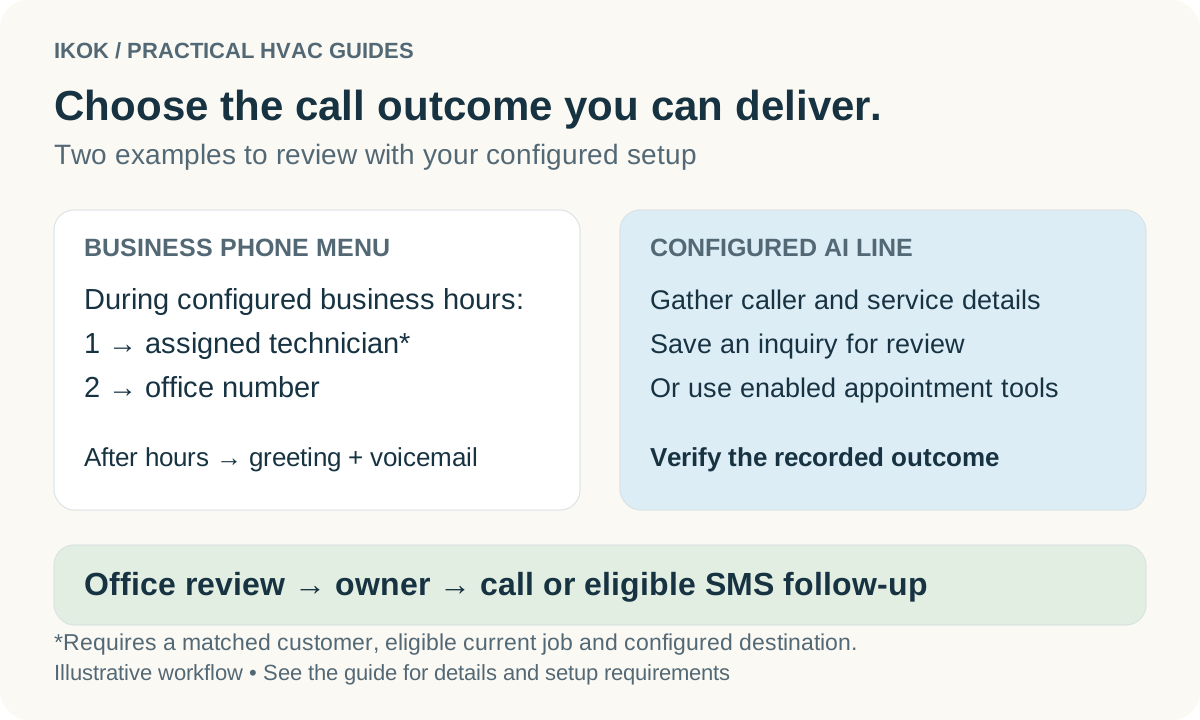
Keep responsibility visible if the owner is in the field. A configured business phone workflow can help the team receive or return the call, but an inquiry still needs an owner. If an AI line captures the request, check the recorded outcome before assuming an appointment was booked. The call-handling guide explains the distinction between conversation and completed action.
Start the new customer's record cleanly
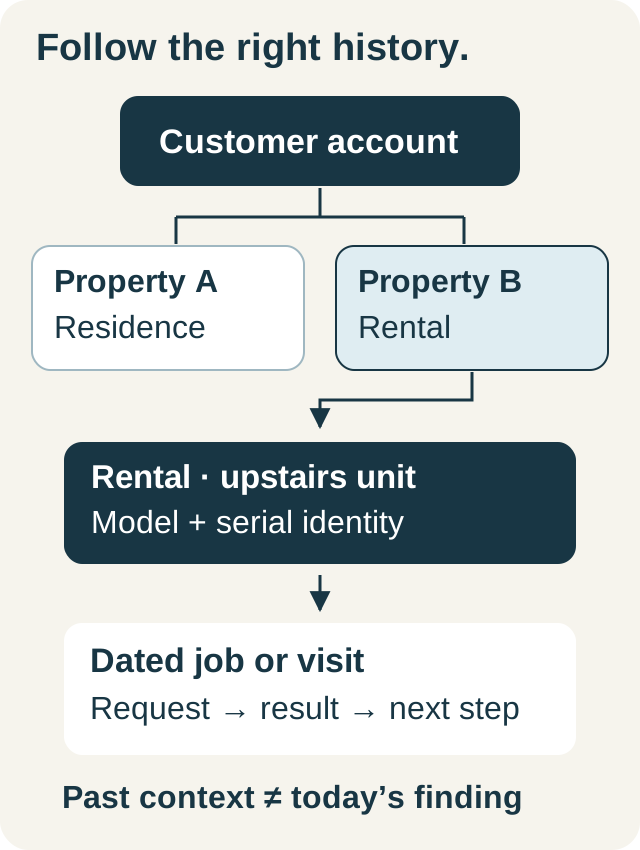
Verify Owen's property, equipment context and decision contact. Two homes on the same street can have different systems and access arrangements. Reusing Nia's scope, equipment details or price would create the wrong starting point, even if the referral made the introduction easy.
Check for an existing record before creating a duplicate. Owen may have used the company previously under another contact. Follow your normal verification process, keep uncertain matches for review and distinguish the service address from billing information. The customer and property history guide provides the broader record structure.
Thank the referrer without revealing the new customer's business
A brief acknowledgment can recognize Nia's recommendation without sharing Owen's appointment, invoice, equipment problem or purchase decision. An example is: “Thank you for recommending our company. We appreciate you making the introduction.” Use the appropriate channel and keep the note consistent with what actually happened.
Do not ask Nia to pressure Owen to approve a proposal or pay an invoice. Once the introduction is made, the new customer should control their own conversation with your business. If there is a referral benefit to administer, use the company's reviewed process and disclose only information appropriate to that arrangement.
Review the handoff before building a bigger program
In an IKOK demonstration, follow a fictional referral from inquiry to the correct customer and property, then to a separately confirmed appointment or proposal. Confirm where your team records source context and who owns the response. Phone, AI and messaging availability, configuration and usage costs should be checked for the setup you need.
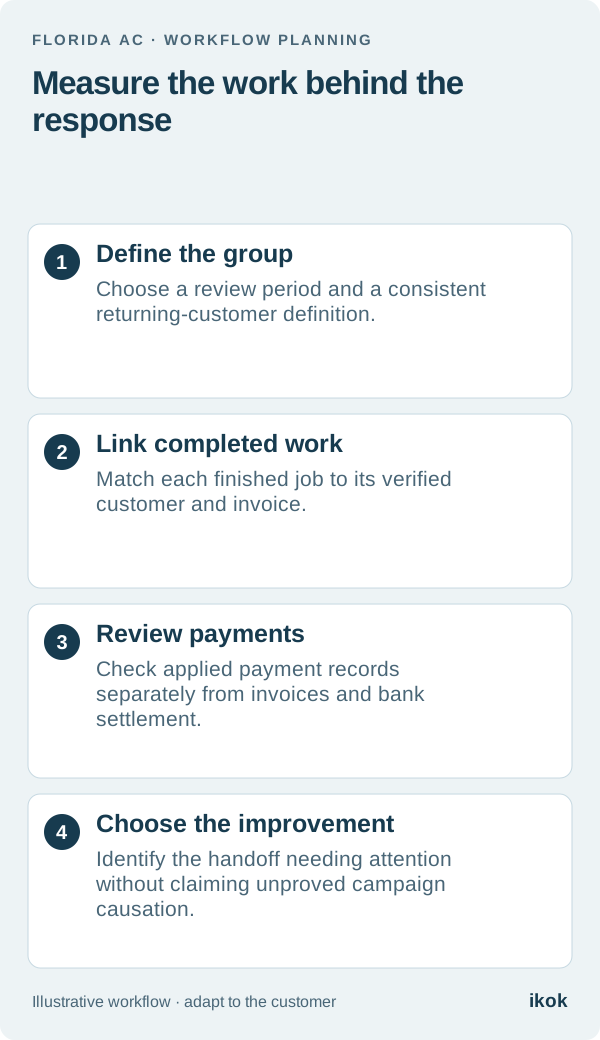
This is an office process using connected records, not a claim that IKOK automatically tracks referral rewards or attributes revenue to recommendations. Count completed work separately from introductions. The repeat-customer measurement worksheet helps preserve that distinction when reviewing results.