Reopen the customer's decision before reopening the document
A customer who postponed an AC replacement may return with a different budget, schedule or concern. Begin with those changes rather than immediately forwarding the old quote. The earlier proposal is useful history; its equipment, price or installation assumptions may no longer describe the current offer.
Consider a fictional Florida homeowner, Rosa. She requested replacement options several months ago and asked the company to revisit the discussion after other home work was finished. She now calls to continue. The office finds the original proposal and records that she wants a new conversation, not that the original option has been accepted.
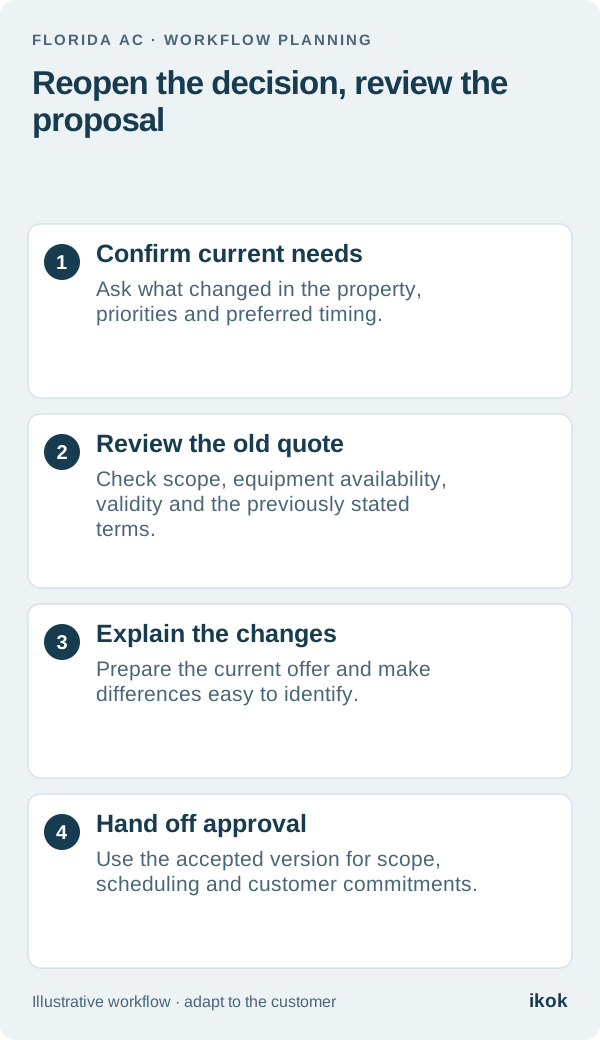
Ask what changed at the property
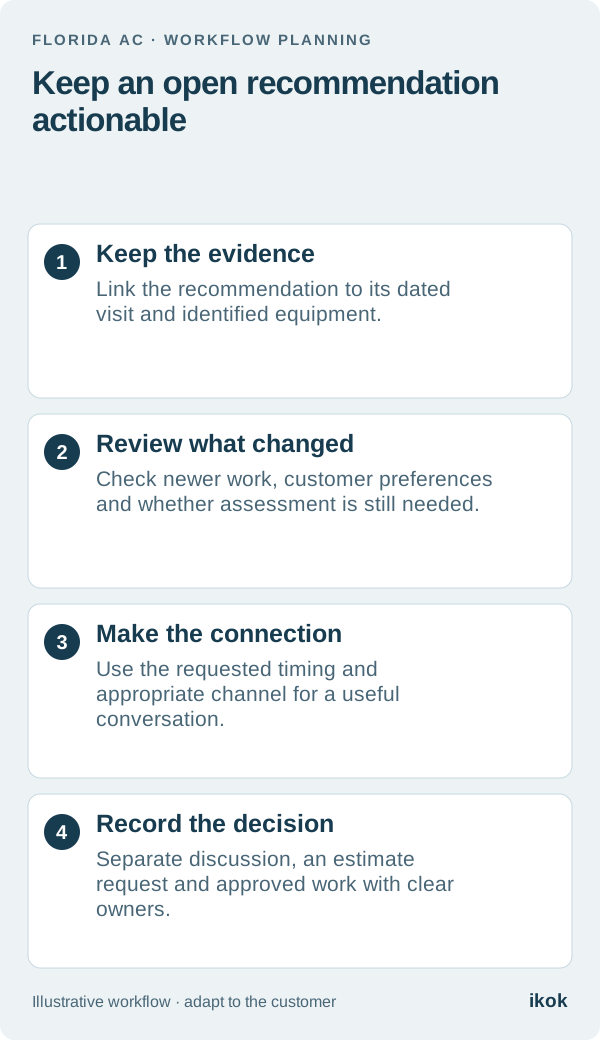
Confirm the system involved, any repairs or replacement work since the assessment, the customer's priorities and the requested timing. If the property or project changed, the qualified reviewer decides whether a new visit or additional information is needed before preparing another offer.
Rosa says the home work changed how one area is used. The office records that detail for the reviewer instead of promising the same equipment will suit it. A previous assessment should not be treated as permanently current. This article concerns the proposal handoff; equipment selection and installation decisions remain with the qualified team reviewing the actual project.
Build a change checklist before resending anything
Use the previous proposal as a reference, then check each item against today's job. A simple comparison helps the customer understand why a new version exists.
| Item | Review before issuing the current offer |
|---|---|
| Customer and property | Correct owner, address, contact and system |
| Installation scope | Included work, assumptions and exclusions still accurate |
| Equipment | Current proposed models, availability and appropriate supporting information |
| Options | Meaningful differences that fit the customer's present needs |
| Price and terms | Reviewed total, validity and payment arrangement |
| Timing | A realistic proposed process, distinct from a confirmed installation date |
| Version | A clear reference for the current proposal and the older record |
For Rosa, the new document should explain changed scope or equipment directly. Avoid a vague “prices changed” note when the actual differences can be described clearly.
Keep useful templates and replace stale details
Reusable descriptions and option layouts can save preparation work. They should not preserve the last customer's quantities, a discontinued model, an old price or terms that no longer apply. Review the customer presentation after updating the source details.
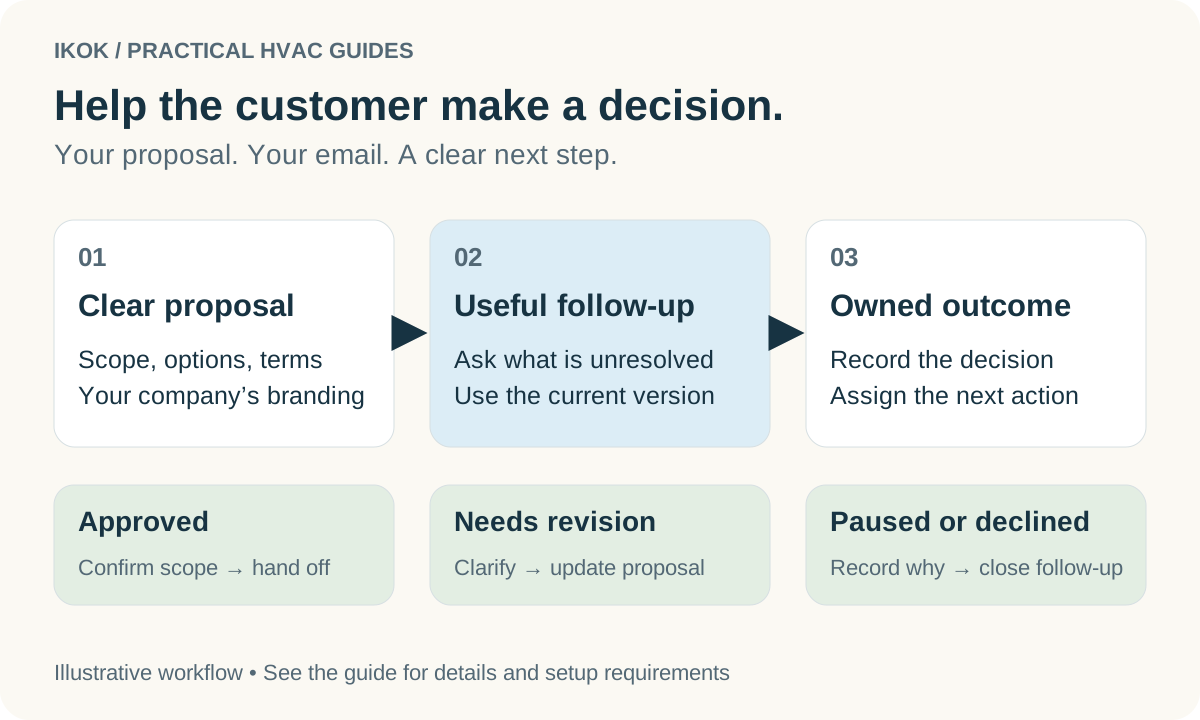
You do not need three options for every conversation. Present the number of credible choices that helps Rosa decide, with clear scope and differences. Equipment photos and specifications should match the proposed offering or be identified as illustrative. Do not invent savings, warranties or performance outcomes to make an option appear more attractive. The estimate follow-up guide covers the broader proposal and email workflow.
Make the current version unmistakable
A useful cover message could say: “Here is the updated proposal following our conversation. We revised the scope for the area you described and confirmed the proposed equipment and pricing. Please review this version; we can walk through the differences before you decide.” Only state checks that your team has completed.
Retain the older proposal as history, but make clear which version the customer should consider. Ask staff to reference the same document in calls and emails. An email open does not establish agreement, and a customer's general interest does not confirm an installation date. If there is acceptance, verify the accepted scope and record the handoff to scheduling and any separately authorized payment process.
Test the revision workflow in IKOK
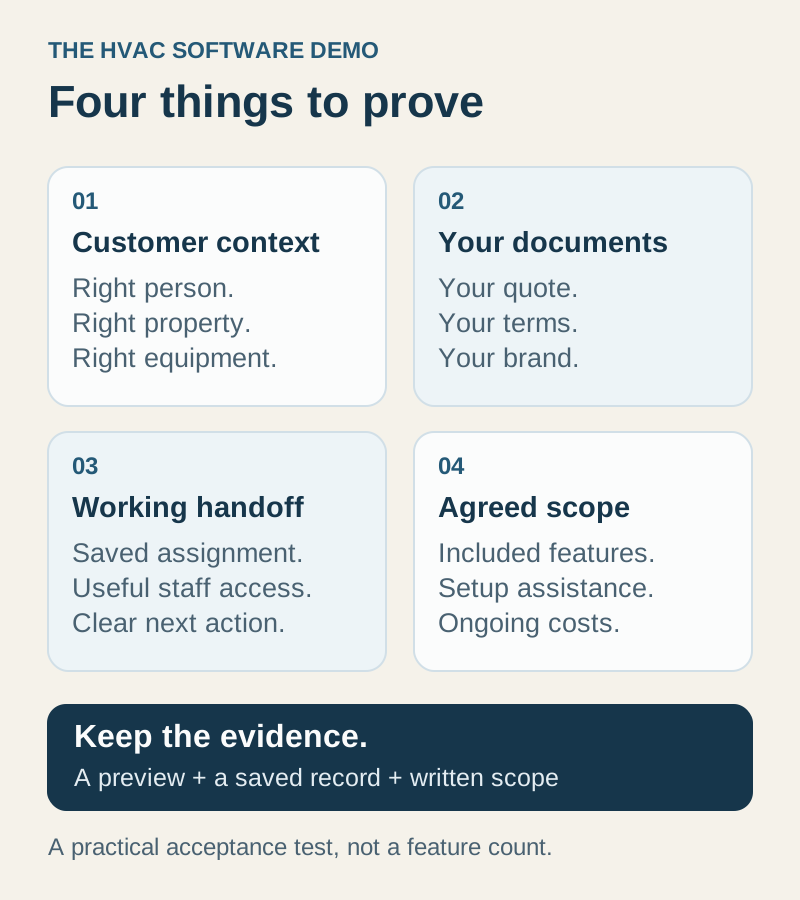
Bring a fictional earlier quote and a short list of changed requirements to a demonstration. Ask to reuse a template, revise equipment and scope, preview the customer options and prepare a clear email introduction. Then inspect how the office identifies the proposal used for the next operational step.
Confirm the available controls and setup for your team. The HVAC proposal workflow shows the product presentation to evaluate. For an open recommendation that has not yet become a quote, start with the deferred-repair follow-up instead.