When a coastal-property customer asks, “Does this look worse than last time?”, an AC company needs more than two photographs on a phone. The office must find the same unit, the same area and the observations recorded at each visit. The qualified reviewer then decides what the comparison supports.
This is a practical evidence handoff for a Florida service team. A coastal address provides location context; it does not prove why an observed condition exists, predict failure or settle a warranty question.
Choose one comparison question
Imagine a fictional property with three outdoor units. Unit U-03 sits beside a sea-facing walkway; the other units occupy different locations. At the October visit, the customer asks about discoloration on U-03’s side panel and mentions a photograph from April.
The question is narrow: what can the team establish about that area between those two visits? Do not compare U-03 with another unit simply because both serve the same property. Verify the equipment reference and any replacement or panel work before treating the images as a continuous history.
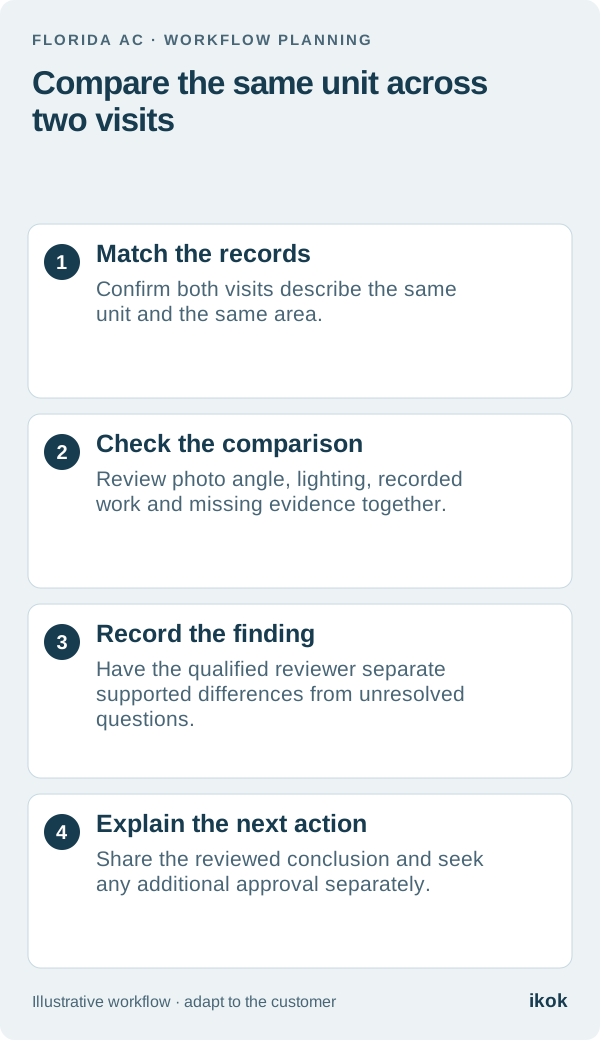
Assemble a two-visit comparison packet
Retrieve the original visit notes and images, not just screenshots forwarded without their job reference. Use a short table to expose missing context before anyone writes a conclusion. These entries are fictional observations, not a technical assessment.
| Comparison item | April visit | October visit |
|---|---|---|
| Unit identity | U-03; equipment reference verified | U-03; matching equipment reference verified |
| Area recorded | Side panel beside the walkway | Same panel identified in the visit note |
| Image context | Wider view in shade; panel edges visible | Closer view in brighter light; one edge cropped |
| Recorded observation | “Discoloration visible near lower panel edge” | “Customer asks whether the visible area has changed” |
| Intervening work | Starting record for this review | Check later records for cleaning, panel work or replacement |
| Comparison limit | No measured extent recorded | Photograph alone cannot establish a measured increase |
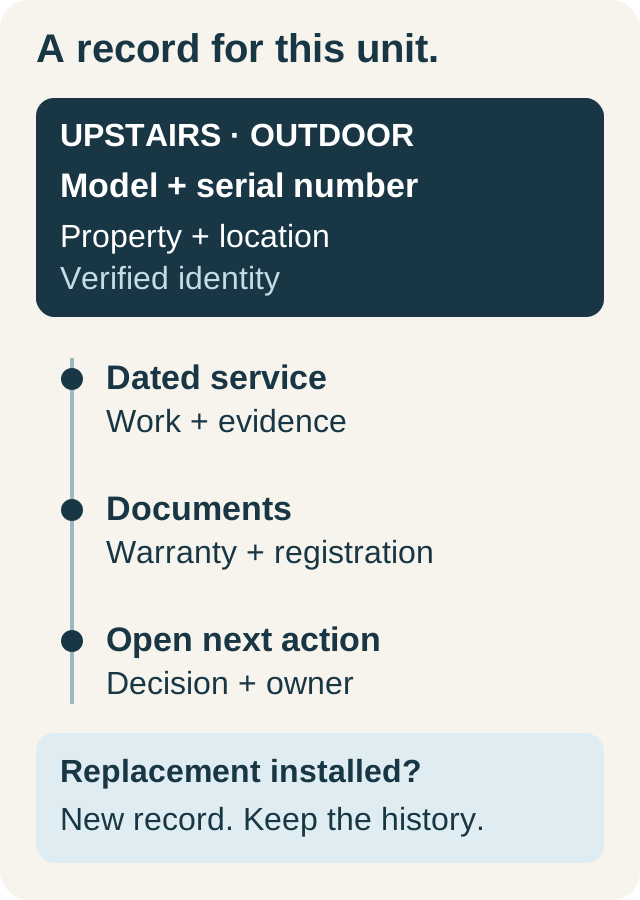
Attach the question, the two visit references and the reviewer’s name. The equipment record guide explains the underlying identity structure; this packet handles the specific comparison decision.
Check whether the evidence is comparable
The October image may look different because its angle, crop or lighting changed. That is a reason to review the evidence, not proof that the condition stayed the same or became worse. Read the technician’s observations alongside the images and identify any work performed between them.
First check whether other images or notes from the already completed visits answer the question. If additional assessment is needed, have the qualified reviewer define it and follow the normal approval process. Do not arrange unnecessary repeat work merely to complete a comparison table or ask the customer to open equipment for a better photograph.
Record one supported outcome
Give the reviewer a clear place to state what can be concluded and what remains unknown. The useful outcomes are more specific than a green or red label:
- Evidence supports a documented difference: describe the finding, its basis and the recommended next decision.
- Evidence does not establish a difference: explain the limitation without claiming the equipment is unchanged.
- Further assessment is needed: identify the question, proposed next step and who will discuss approval.
For U-03, the reviewer might find the photographs insufficient for a reliable comparison. Record that conclusion with its reason. Do not convert it into “coastal corrosion confirmed,” a forecast of failure or an assurance of warranty coverage.
Explain the result without overstating it
A useful customer update could say: “We found both visit records for U-03. The photographs show the same panel from different views, so they do not establish the change you asked about. Our reviewer has identified the next step for us to discuss with you.” Use that wording only when it matches the review.
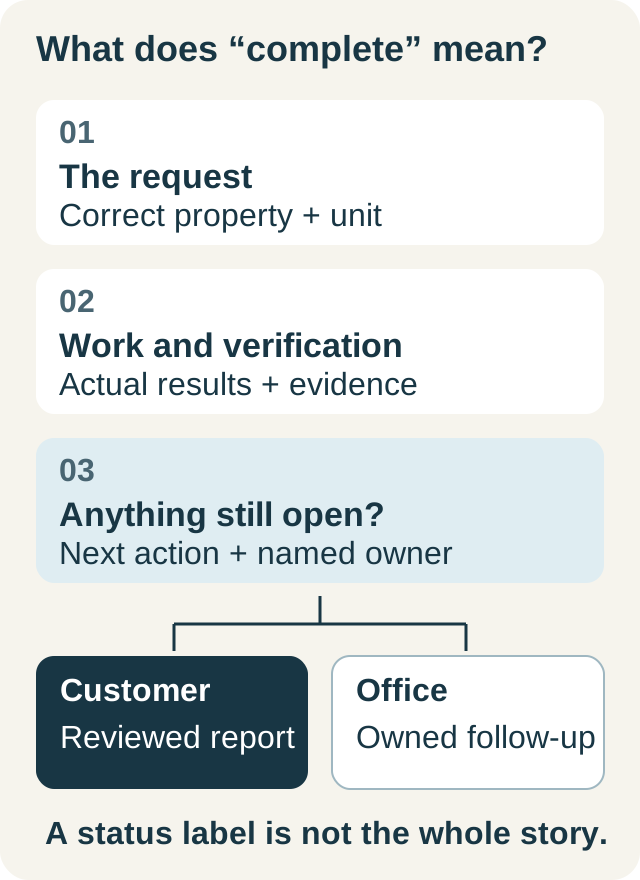
Share the reviewed findings and relevant evidence, keeping internal discussion separate. If further work is proposed, record the scope and customer decision independently. Use the service closeout guide to give the unresolved item an owner rather than leaving it buried in the image attachments.
Demonstrate retrieval and review in IKOK
In an IKOK equipment-history walkthrough, ask to find U-03, open the two service events and locate their evidence. Have another employee trace the comparison question to the reviewer’s finding and the next action. Confirm the available views and document handling for your setup.
This comparison packet is a team review method, not a claim that IKOK automatically aligns photographs or predicts equipment condition. Its value is a defensible handoff: the correct records, the limits of their evidence and a clear decision the office can explain.