Plan around the owner's request, not an assumed season
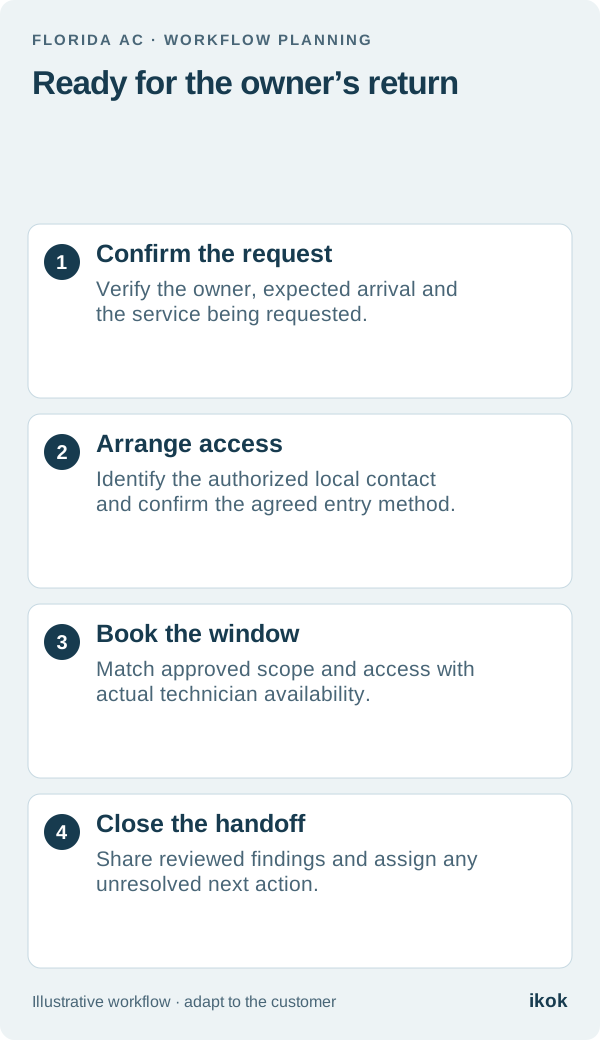
For an AC company serving seasonal-home owners, accurate dates matter: customers do not all leave or return together. Ask for the customer's current plans and the service they want before reserving a technician. A calendar note from last year is useful background, not a current appointment request.
UF/IFAS discusses professional AC service as part of preparing a seasonal home for an extended absence. An arrival visit is a separate operating decision. Your team should agree its purpose and scope with the customer rather than presenting every returning owner with a supposedly mandatory service.
In a fictional example, Priya expects to return to her Florida home in three weeks and asks her AC company to arrange a visit beforehand. She has an active maintenance plan, but the office still checks whether this visit is covered and how entry will be authorized.
Build one arrival-readiness record
Keep the owner's arrival, the requested service window and the booked appointment as distinct facts. A changed travel date should be visible to the office without silently moving an already confirmed appointment.
| Detail | What the office needs |
|---|---|
| Owner request | Who requested the visit and its purpose |
| Travel context | Expected arrival date and when it was confirmed |
| Service scope | Covered maintenance or separately approved work |
| Property access | Authorized contact, entry arrangement and any building requirements |
| Appointment | The actual confirmed date and arrival window |
| Decision contact | Who can discuss additional work and how to reach them |
| Report recipient | Who should receive the reviewed service summary |
Use the customer's preferred appropriate channel for confirmation. Avoid putting keys, codes or sensitive access instructions into a general customer-facing report or an unnecessary message thread.
Resolve access before dispatching
Priya nominates a local contact to meet the technician. The dispatcher confirms the contact's role and the agreed window. If the property is in a managed building, the office verifies any applicable access arrangements directly; requirements vary by property.
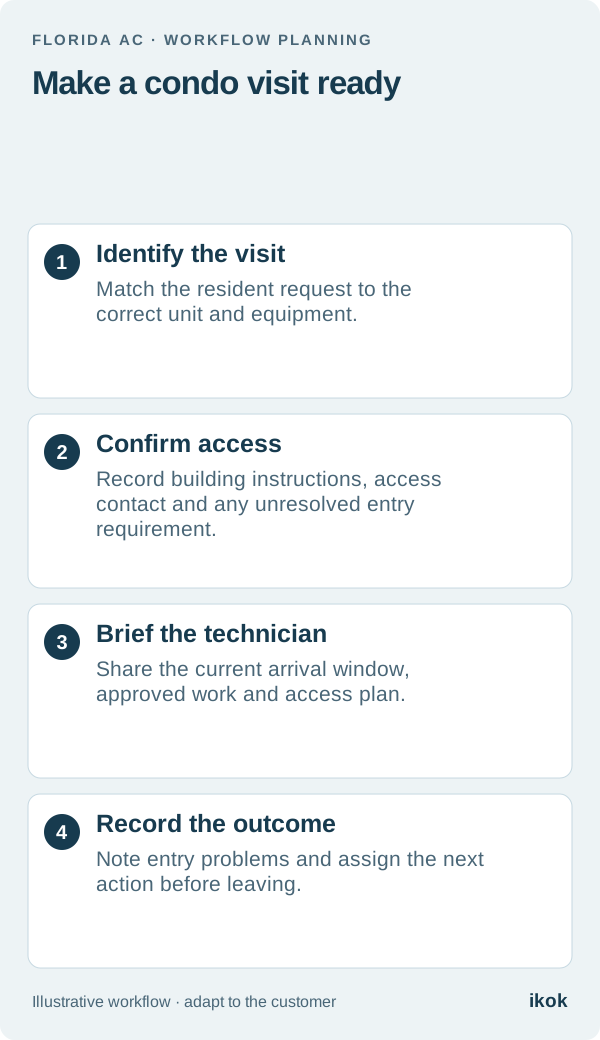
The readiness question is practical: can the assigned technician perform the agreed work at the booked time? If entry remains uncertain, give someone responsibility for resolving it before departure. Do not assume that holding a code from a prior visit permits its reuse. For a condominium, the building-access checklist adds unit, parking and management details.
Review the existing plan and equipment
Check the covered equipment, last recorded visit and any open recommendation before preparing the job. A unit may have been replaced during the owner's absence. A previous note may describe a question that still needs an answer, rather than work already approved.
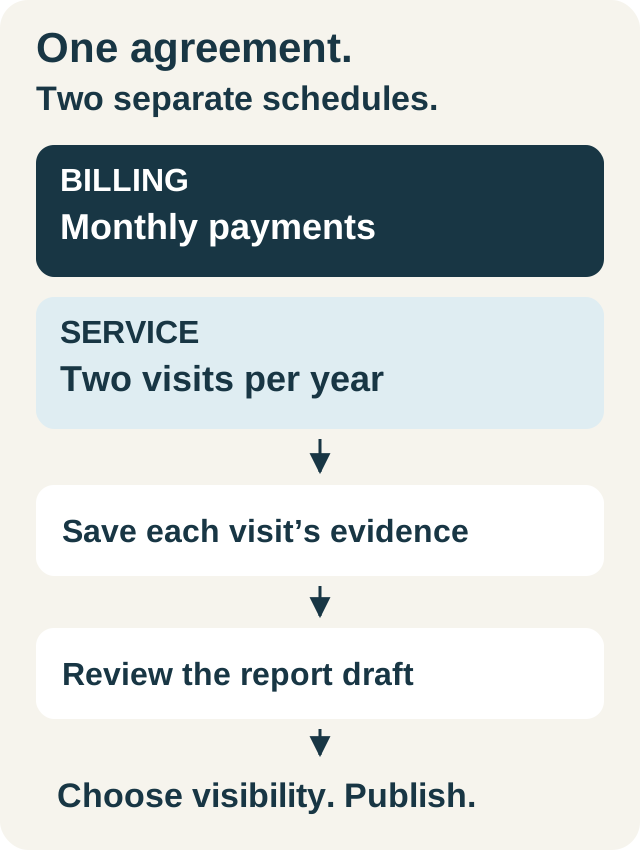
State what the visit includes and which findings would require another decision. If additional work is proposed, contact the appropriate person and record the approval through the company's normal process. The arrival deadline does not justify guessing at scope or silently changing the customer's agreement. Keep billing dates and service dates independent, as described in the maintenance agreement workflow.
Finish with evidence and a named next step
After the visit, record what was actually performed on each identified unit. Prepare the service summary for the intended recipient and separate internal access or staff notes from the customer-facing report. An unresolved item should identify the next action and who owns it.
For Priya, a useful update confirms completion of the agreed visit, provides the reviewed report and identifies any decision still needed. It should not guarantee that the system will have no future issue or imply that the company inspected parts of the home outside its scope. If access failed, record that outcome accurately and arrange a new decision instead of marking the visit complete.
Test the remote-owner handoff in IKOK
Walk through a customer with a seasonal property, a covered system and a local access contact. Review the service history, appointment context, saved maintenance execution and report draft. Confirm how your team records permissions and chooses the recipient before sharing.
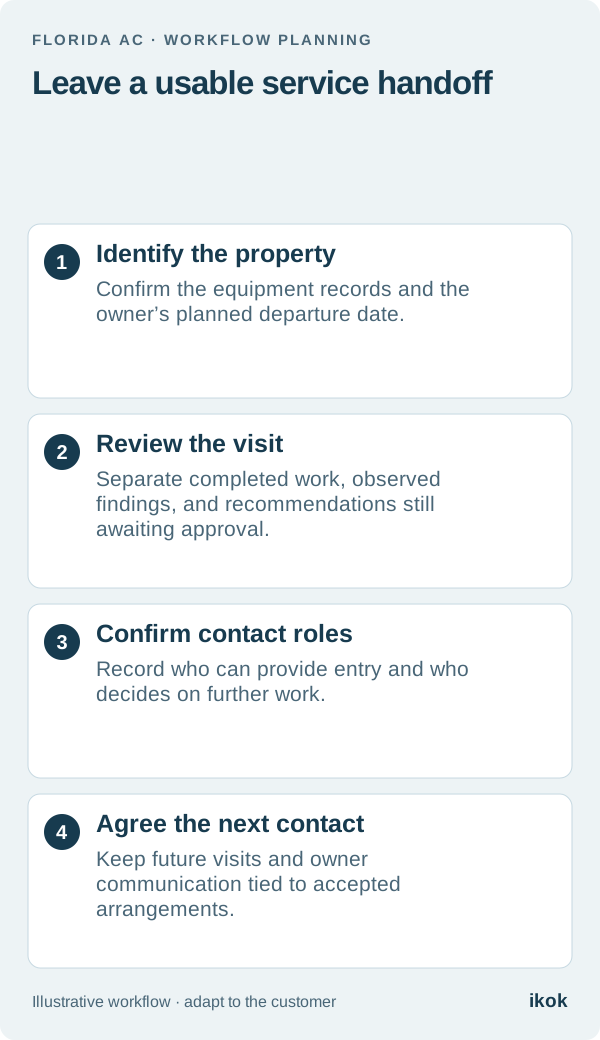
The practical benefit is continuity when the owner and technician are not in the same place. When the customer later plans to leave, use the separate departure handoff to document that different request rather than copying the arrival visit unchanged.