A seasonal homeowner may leave Florida with a completed AC visit, an open estimate, a neighbor holding a key, and several different expectations about what happens next. A departure handoff brings those details together before the owner travels. It should make the service company’s actual responsibilities easy to understand throughout the absence.
UF/IFAS’s seasonal-home guidance recommends planning ahead and arranging professional AC service before departure. Use that as a reason to start the coordination conversation early. Equipment settings and technical work belong in the qualified service team’s property-specific recommendations, not in a generic office message.
Begin with the owner’s departure plan
In this fictional example, Elaine plans to leave her Florida home after the winter season and return in the autumn. She has two systems and asks whether the last maintenance appointment means everything is ready for the entire absence. The office does not turn that question into a blanket assurance.
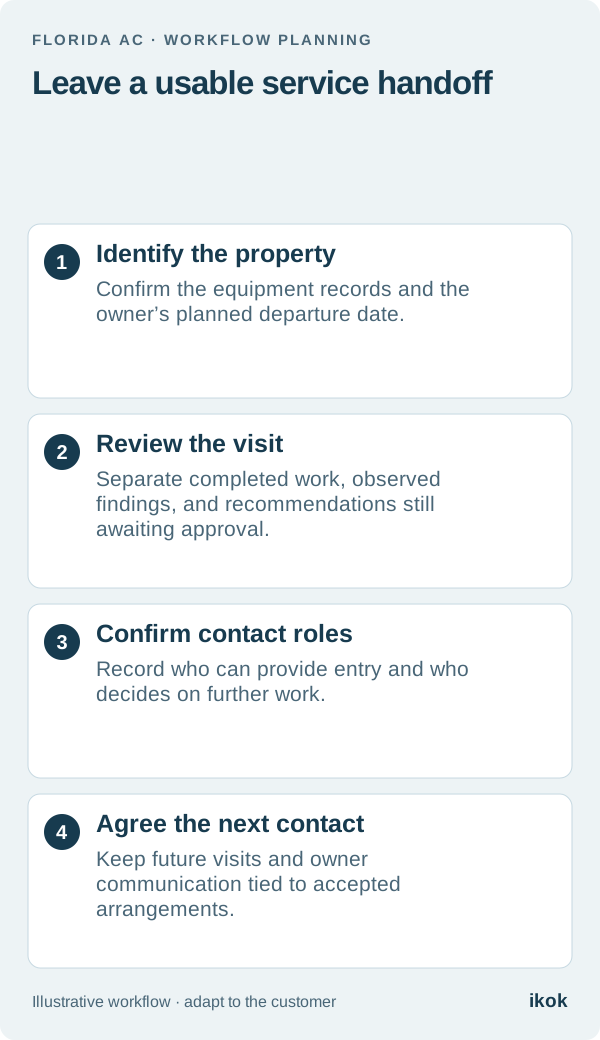
Instead, it confirms the departure date, the property and system records, what work was booked, and what the technician recorded. If Elaine requests additional work before leaving, the office reviews whether it can be scheduled and approved in time. The deadline is useful planning context; it does not make unperformed work complete.
Make a four-part handoff packet
Keep the packet short enough for both the owner and the office to use. Its value comes from separating records that are often bundled into one “all set” message.
| Part | What belongs in it |
|---|---|
| Property and equipment | Service address, clear system labels, and links to verified equipment records |
| Completed visit | Date, actual work and findings, and the reviewed customer report |
| Open decisions | Recommendations, estimates, or access questions still needing an owner decision |
| Future arrangements | Agreed visits, named contacts, and the next planned communication |
For Elaine, the packet might show completed service on both named systems and a separately proposed item she has not yet accepted. Preserve that distinction. A customer report explains the visit; it does not automatically authorize an estimate or promise that no later issue will arise.
Give the local contact a clear role
A neighbor who can provide entry is not automatically the person who can approve work or receive every account detail. Ask the owner to confirm the local contact’s intended role and record the arrangement your business accepts for this property.
Keep practical access instructions available to the appropriate staff, without placing sensitive entry details in broadly shared customer reports. Confirm the owner’s preferred permitted contact method while away and who the office should approach when a decision is needed. These arrangements vary by property; do not assume every seasonal home follows the same rules.
If the owner changes the contact later, update the current arrangement and make sure the next scheduled visit uses it. The earlier visit remains a record of who was involved at that time.
Separate future service from ongoing supervision
An agreement for scheduled maintenance does not by itself promise continuous monitoring, property management, or an immediate response to every event. Describe the service your company has actually agreed to provide. If Elaine expects someone to check the home between visits, clarify who owns that separate responsibility.
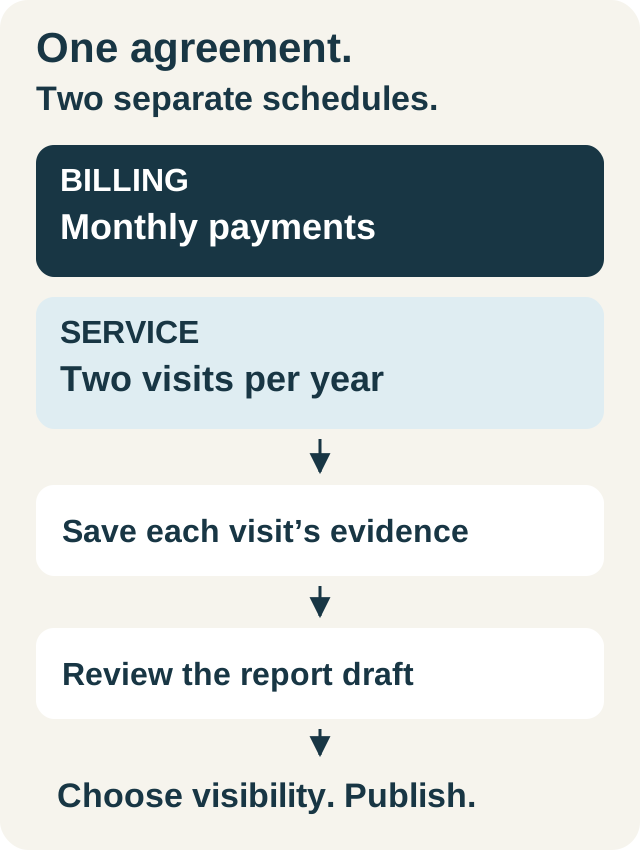
Review the next maintenance occurrence and the billing schedule independently. A future visit should follow the accepted service arrangement; a recurring charge needs its agreed setup and authorization. Use the maintenance agreement workflow to review coverage, terms, and visit planning without treating a payment as proof that service occurred.
Send the reviewed record and preserve open work
Before sharing the packet, check equipment identity, completed tasks, wording, and customer visibility. In IKOK, saved maintenance execution can populate a report draft. The team still reviews the included content and internal notes before publishing the customer version.
Give each unfinished item a next action. “Office to confirm Elaine’s decision on the estimate before departure” is more useful than leaving the estimate attached without an owner. If the customer postpones the decision, record that response and agree an appropriate follow-up rather than repeatedly sending the same request.
Demonstrate continuity across the absence
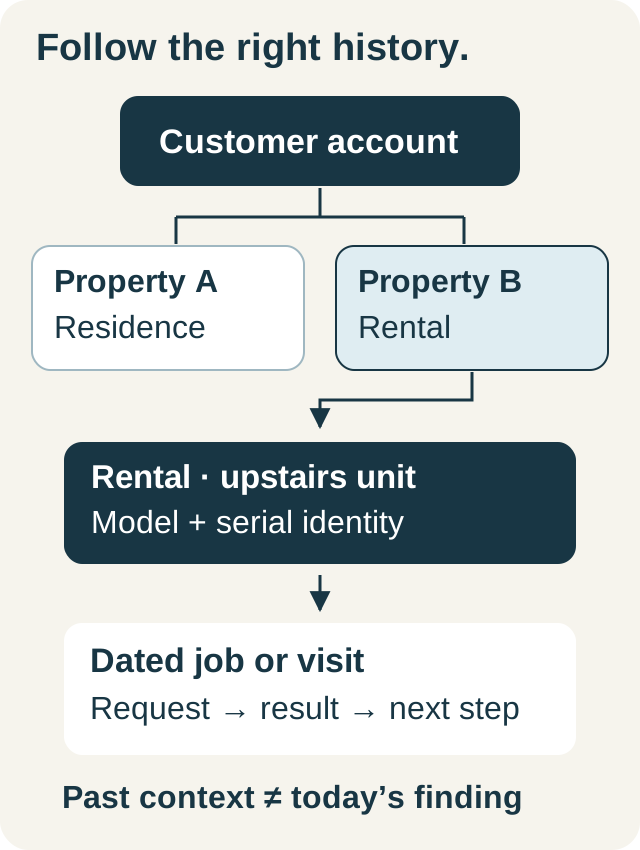
In a walkthrough of IKOK maintenance programs, use one fictional seasonal property to find the accepted plan, the completed visit, its reviewed report, and the next scheduled work. Ask how the team finds the current property contact and the original owner decision.
The demonstration should show continuity between visits, not a promise of remote supervision. The customer and property history guide gives the broader record structure behind that handoff.