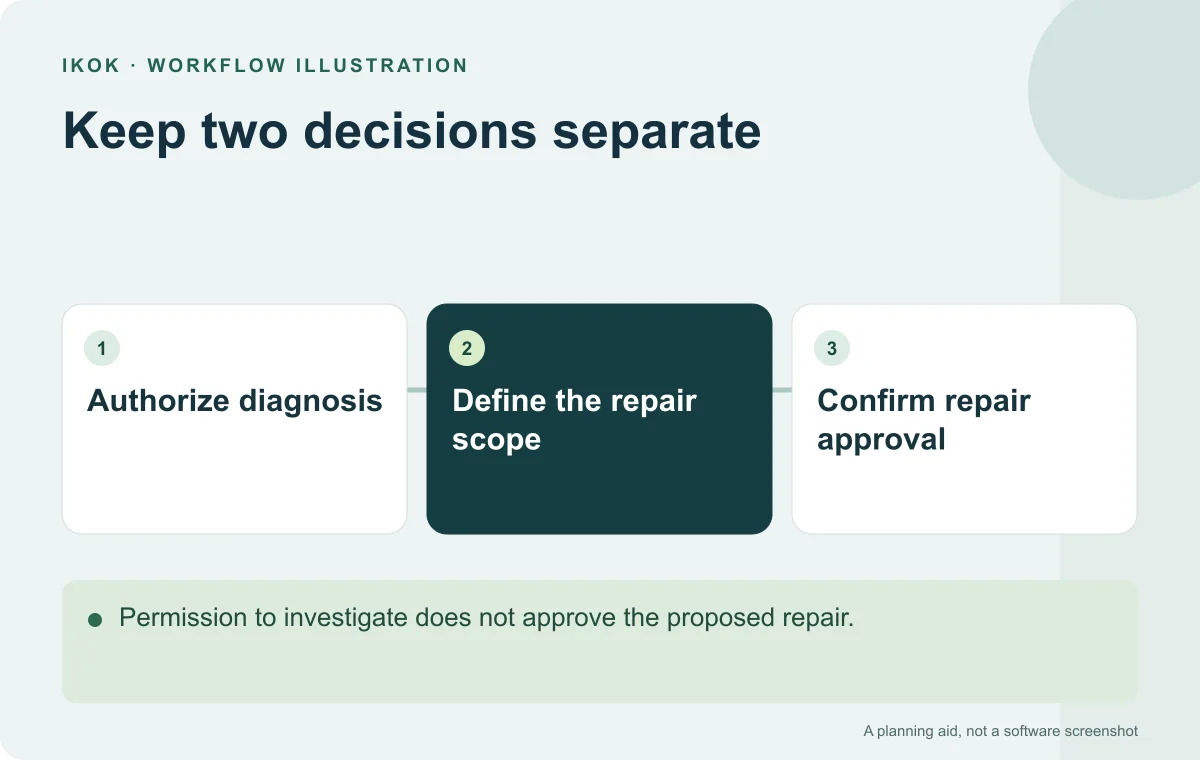
A plumbing estimate should make the next permission clear. A customer agreeing to a diagnostic visit has agreed to that visit's stated scope and charge. The repair recommendation that follows needs its own clear description, price and decision. Plumbing estimating software is useful when the office and technician can keep those two stages understandable.
This guide follows a fictional company, Brookline Plumbing. Elise handles the office; Marcus attends a visit for homeowner Dana, who reports water appearing beneath a utility-room fixture. The example concerns estimate preparation and customer decisions. It does not prescribe a repair or establish a diagnosis from a reported symptom.
Start with the visit the customer actually requested
Before the appointment, Elise records the service address, the reported concern and what the initial visit includes. In this fictional example, the diagnostic visit is priced at $120. That is an illustrative company charge, not a market rate or a recommended price. The company explains the visit's boundaries and confirms the arrangement with Dana before dispatch.
The starting description is deliberately limited: investigate the reported concern at the identified fixture and explain the findings. It does not say that every necessary repair, replacement part or additional visit is included. Elise also records who may discuss and approve further work. A name on an appointment is not enough to establish that person's authority.
Keep any diagnostic-credit policy explicit. If your business credits an initial charge toward an approved repair, state when the credit applies and how the quoted totals account for it. This example uses no credit, so the two amounts remain separate throughout the discussion.
Turn the findings into a bounded repair estimate
After inspecting the actual installation, Marcus identifies a repair he is qualified to recommend. He records the affected component, the work proposed and the information supporting that recommendation. Elise should be able to read his description without turning a technician's shorthand into a promise.
A useful repair estimate answers five questions: which component is involved, what work is included, what is excluded, what the customer would pay, and what must be confirmed before work starts. Where equipment or parts remain uncertain, the estimate should identify that uncertainty rather than present a placeholder as a confirmed selection.
Marcus proposes a fictional $460 repair. Dana's decision is whether to authorize that described repair. With the separate $120 diagnostic visit, the combined example amount would be $580 before any applicable tax. The real proposal must explain tax treatment and the final amount using the company's actual process; these sample figures demonstrate the relationship between the stages.
Use a two-stage estimate worksheet
Elise and Marcus use this review sheet before presenting the recommendation. It is a manual working aid, not a special automated status system in IKOK.
| Review field | Diagnostic visit | Proposed repair |
|---|---|---|
| Record reference | D-104: reported utility-room concern | R-104: recommendation based on D-104 |
| Scope | Investigate the identified concern and report findings | Perform the specifically described repair |
| Example charge | $120 | $460; separate from the diagnostic charge |
| Customer decision | Initial visit arrangement confirmed | Awaiting Dana's repair decision |
| Open issue | Findings remain to be established on site | Parts and access conditions listed in the estimate |
| Owner of next action | Marcus completes and documents the visit | Elise explains the proposal and records the response |
The references are fictional labels. Your team can use its existing quote and visit references. What matters is that the repair description can be traced back to the findings without changing the original visit into a broader authorization.
Before sending, read the customer view aloud. If “service call” is the only description on both stages, the customer cannot see what the second amount purchases. Replace that ambiguity with the actual work and its boundaries.
Handle the additional concern without silently expanding the repair
During the discussion, Dana asks Marcus to look at a second fixture. This is the exception that tests the process. The original concern and proposed repair are still identifiable; the second request has its own location and an unresolved scope.
Marcus records the request and explains what information is needed to assess it. Elise checks whether it requires another assessment, a separately described item or a revised proposal. She does not mark the original repair approved because Dana asked another question, and she does not assume the first diagnostic arrangement covers unlimited additional investigation.
If the second concern changes the proposal, show the customer which scope and total are current. Keep the earlier record available according to the company's recordkeeping process. Avoid leaving two different descriptions circulating as though both are the agreed instruction.
Put the reviewed information into IKOK
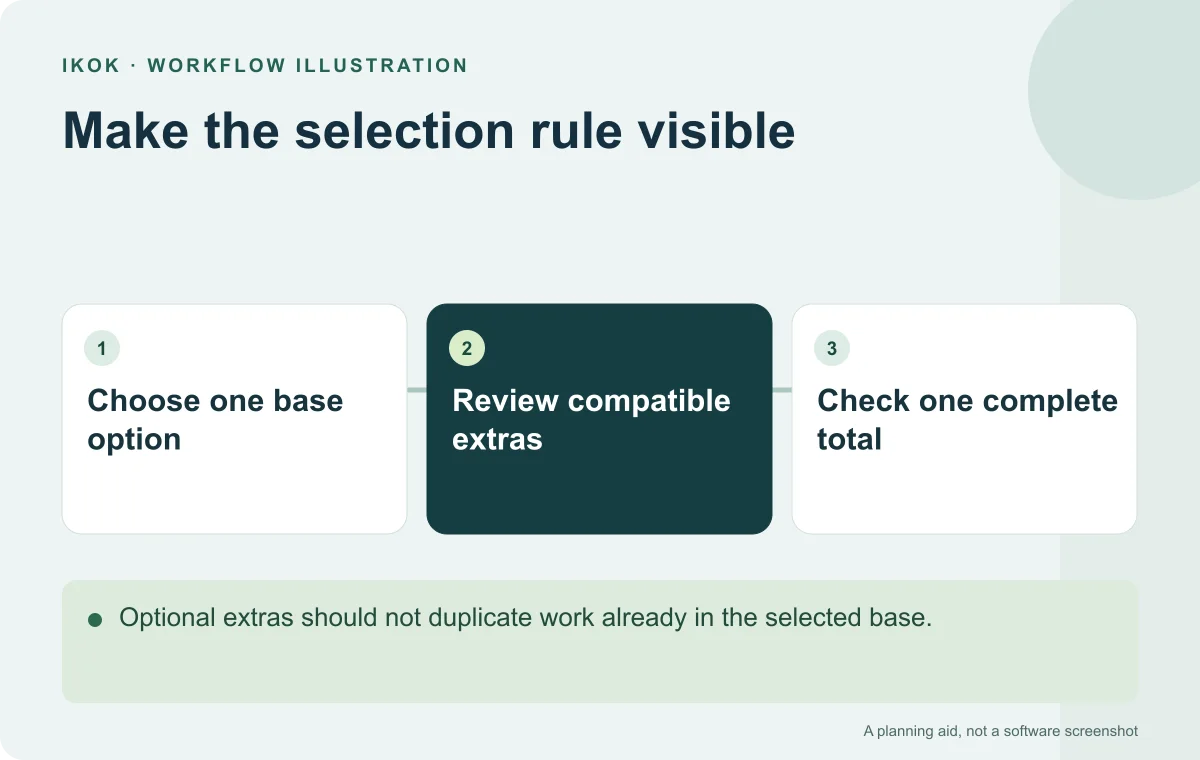
IKOK's quote editor includes work-description and scope fields, line items with descriptions, quantities and prices, and a customer preview. Its custom offerings and reusable templates can help present more detailed choices where those choices are useful. A straightforward repair may need one clear proposal rather than several artificial packages.
Use those fields to describe the diagnostic arrangement and the proposed repair accurately. Review the line-item quantity, wording and total after saving, then preview what Dana will receive. Confirm that the document's presentation makes the separate charge or any applicable credit understandable. The software does not decide your diagnostic policy or infer customer permission from a conversation.
The interactive proposal example shows the customer-facing presentation with fictional HVAC packages. It illustrates how details can be explained; it is not a plumbing-specific diagnostic calculator or a template for choosing a repair.
Finish with one decision and a usable next step
Dana may approve, decline, ask for clarification or defer the repair. Elise records the actual outcome and the person responsible for the next action. If Dana approves, the next worker needs the accepted scope, the relevant findings and any conditions still requiring confirmation. If Dana defers, the office should know which proposal is open and when, if agreed, to revisit it.
Once authorized work is performed, continue with the separate plumbing invoicing workflow. That stage reconciles the work and billing records; this estimate review establishes what was offered and what the customer decided.
For a small pilot, review five recent estimates. Count how many clearly separate diagnosis from repair, how many required a scope clarification, and whether the next employee could identify the customer's decision. Use the actual records to improve the wording; do not treat a smaller number of questions as proof of higher sales.
Questions plumbing owners ask
Should the diagnostic charge be inside the repair estimate?
Use a presentation that clearly explains your actual policy. If both appear together, label the diagnostic amount, repair amount and any conditional credit distinctly. If they are separate, make the relationship clear so the customer can understand the complete commitment.
Can a reusable repair description replace the technician's findings?
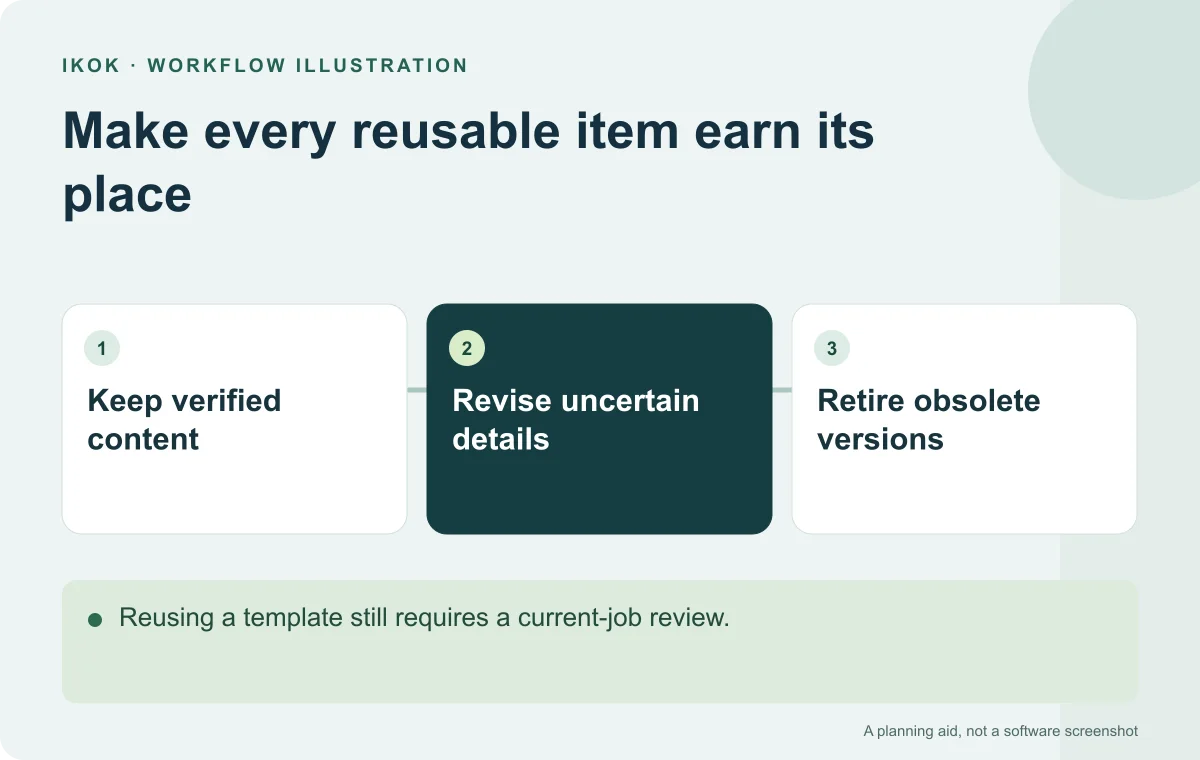
No. Reusable wording can provide a starting structure. The technician still establishes what was observed, which component is involved and what the actual property requires. Check the copied description against this visit before presenting it.
What should a plumbing estimating software demonstration prove?
Ask to prepare the initial visit description, add the separate repair recommendation, revise an additional request and preview the resulting customer document. Check how the team finds the saved proposal and records the customer's next decision. Do not assume specialist diagnosis or automatic approval handling from a general quote editor.
Bring a diagnostic-to-repair example to an IKOK walkthrough. Ask the office and technician to explain both stages from the same records before deciding whether the workflow fits your business.
Photo: Original IKOK workflow illustration, November 23, 2026. A planning aid for the article; not a product screenshot or a record of an actual customer outcome.