A business phone quote is easier to compare when every charge has a unit, an owner and a clear inclusion rule. “Monthly service” alone does not tell a small service company what it will pay for its numbers, staff access or calling activity.
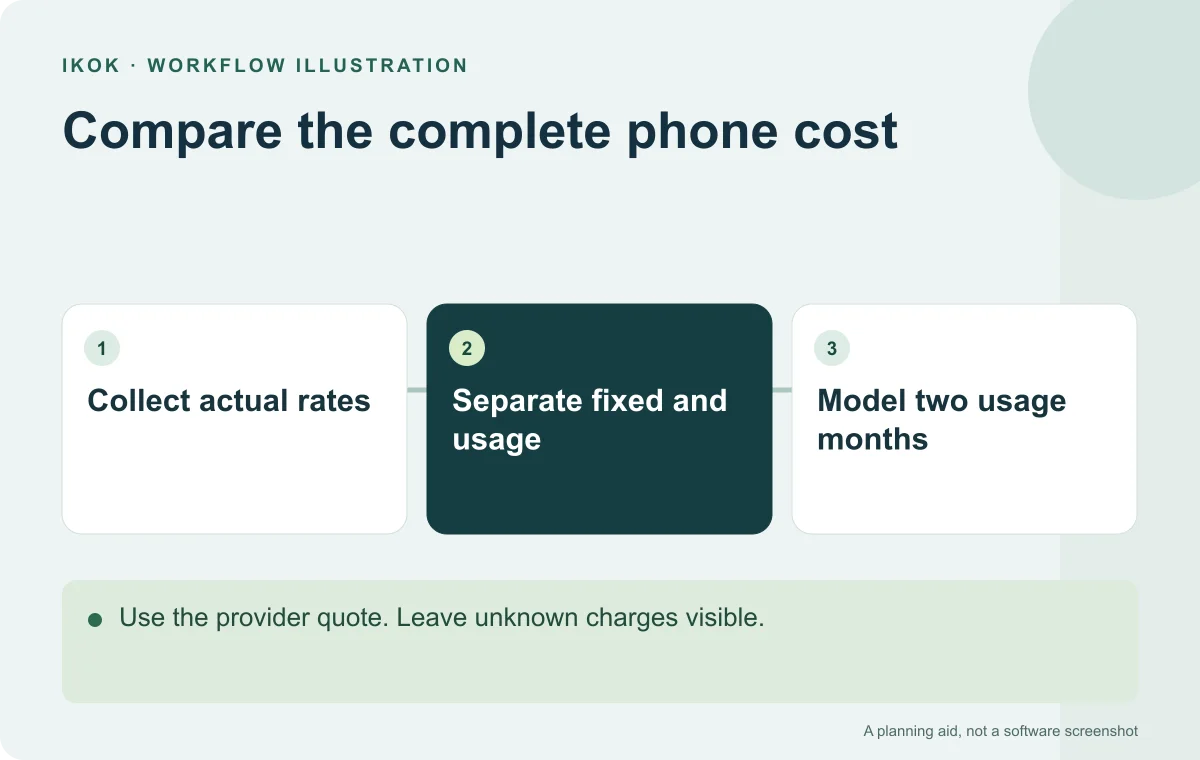
Use a phone-specific worksheet to compare the same working setup. Separate the initial work from recurring charges, identify what usage is included, and leave unanswered prices unresolved. The aim is a complete written offer your team can check against the service it actually needs.
Compare two configurations for the same team
Mason Repair is a fictional three-person service business. Dana owns it, Alex answers office calls, and Noor handles field visits and customer callbacks.
They are considering two configurations:
- Configuration A: one main business number used for service and new inquiries.
- Configuration B: the same main number plus a separate number for new project inquiries.
The staff and their responsibilities remain the same. The second number is useful only if it gives a defined group of callers a clearer destination and someone owns those calls.
Alex writes down who needs access, who returns calls and which workflows must work. Dana asks for both configurations to be quoted on that same scope. Otherwise, one offer might include a capability or service that the other has left out.
Two numbers do not automatically mean twice the total cost. One number also does not prove a lower complete bill. The answer depends on the actual plan, included quantities, usage and any additional work.
Start with quantities, then request rates
Before comparing prices, collect the inputs the quote depends on:
- Business numbers required, including their intended types and purposes.
- Staff who need calling or administrative access.
- Expected inbound and outbound calling, using actual history where available.
- Messaging needs, if the business wants SMS.
- Setup, configuration and assistance the team expects to receive.
Keep assumptions visible. If Mason Repair has no reliable calling history, Alex labels the estimate as a planning assumption and asks how the quote changes at lower and higher usage.
A call count is not necessarily a billed-minute total. Ask how the offered service measures usage, including rounding, inbound and outbound activity, and any separately billable connection segments. Do not convert “calls per week” into a confident monthly cost without that definition.
Fill in a phone-cost worksheet
Use the same rows for each configuration. The dashes below are deliberately unfilled quote fields, not zero-cost assumptions.
| Cost line | Billing basis to confirm | A: one number | B: two numbers |
|---|---|---|---|
| Phone service | Recurring service charge and covered functions | — | — |
| Staff access | Included users, additional access and permissions | — | — |
| Business numbers | Included quantity, number type and additional-number charge | — | — |
| Calling usage | Included allowance, billable units and applicable rates | — | — |
| Setup or transfer assistance | Deliverables, responsibility and one-time charges | — | — |
| Business SMS, if required | Activation, registration, allowance and usage basis | — | — |
| Optional processing, if offered | Exact available feature and separate charge basis | — | — |
| Provider charges and taxes | What applies, who bills it and whether already included | — | — |
| Changes or cancellation | Relevant terms and any actual quoted charge | — | — |
For every filled amount, retain the quote date and the document or written answer supporting it. Mark each row included, separately priced, not required or awaiting confirmation.
Provider voice rate cards can distinguish calling, phone numbers and optional processing. They help identify questions, but a provider's public prices are not an IKOK quote. Use the commercial terms offered for your actual setup.
Prevent allowances and provider items from being counted twice
Dana asks whether the main number and any calling allowance are already included in the recurring phone-service charge. If they are, Alex records that relationship instead of adding the included amount again.
For usage beyond an allowance, calculate only the additional billable units under the quoted rules. If the offer has tiers, minimums or different rates for different activity, preserve those distinctions rather than applying one invented average.
Alex also asks who sends each bill. A provider item might be included in the quoted service, passed through separately or paid under a direct arrangement. The worksheet needs that answer before totals are compared.
This check resolves a common ambiguity: two amounts described differently may cover the same service. Conversely, an attractive subtotal may exclude a required item. An unexplained blank should remain visible until the supplier resolves it.
Keep optional features explicit
Mason Repair initially needs voice calling. Dana is interested in SMS but has not yet agreed that it belongs in the first rollout.
IKOK's business phone setup requires configuration, with available routes, inclusions and usage charges depending on the arrangement. Business SMS has separate activation requirements. Ask for the specific messaging package, registration work, permissions and sending conditions if it is part of your proposed setup.
Do the same for recording or transcription if either is requested. Confirm whether the feature is actually available in the proposed configuration, what the team can access, and which capture, processing or storage charges apply. Do not add it to the accepted scope merely because a provider's rate card lists it.
The worksheet is a purchasing aid. It does not establish that every optional feature is included, enabled or appropriate for every team.
Resolve the second-number exception before choosing
The first quote for Configuration B lists an additional number but leaves its setup work and calling allowance unclear. Alex cannot tell whether both lines share one allowance or have separate treatment.
He marks those rows awaiting confirmation and asks for a written revision. Dana does not approve a comparison that treats missing terms as free.
The revised offer must explain the second number's role, who handles those calls, any added setup and how usage is billed. It must also identify whether the same three staff members retain the access they need.
Only then can the team compare the complete options. If the second line still has no clear operational owner, Dana can defer it without pretending the requirement has vanished. Record the later decision and what would need to be re-quoted.
Separate launch cost from a normal month
Keep two totals: the initial amount due under the offer, and the estimated recurring cost for the agreed usage scenario. Show the assumptions beside each.
A simple recurring comparison starts with confirmed fixed charges, adds applicable usage outside included allowances, and includes separately billed items that actually apply. Add one-time work only to the period in which it is charged. Avoid silently treating every fee as monthly or annual.
For the broader membership, accounting connections and other operational tools, use the complete software-cost guide. This worksheet stays focused on the phone portion of that budget.
After activation, Alex compares the first complete bill with the accepted scope and observed usage. He asks about differences rather than assuming they are errors or savings. Dana retains the revised explanation with the quote.
Questions service-business owners ask
Does another employee require another business number?
Not necessarily. Staff access and business-number quantity are separate questions. Ask how the proposed plan supports each person's role and whether any additional access or number is required.
Can we compare plans using only the included minutes?
No. Confirm the billable unit, included scope, additional usage rules and other applicable charges. Compare the same calling assumptions and staff requirements across both offers.
Can we budget zero for a charge that is not listed?
Treat it as unresolved until the supplier confirms it is included, not applicable or separately priced. Keep the written answer with the worksheet so the decision can be reviewed later.
Review your actual calling scope
Bring your number count, staff roles and available usage history to an IKOK phone-cost walkthrough. Ask for the setup, recurring charges and usage rules that apply to your team, with unresolved items identified before you choose.
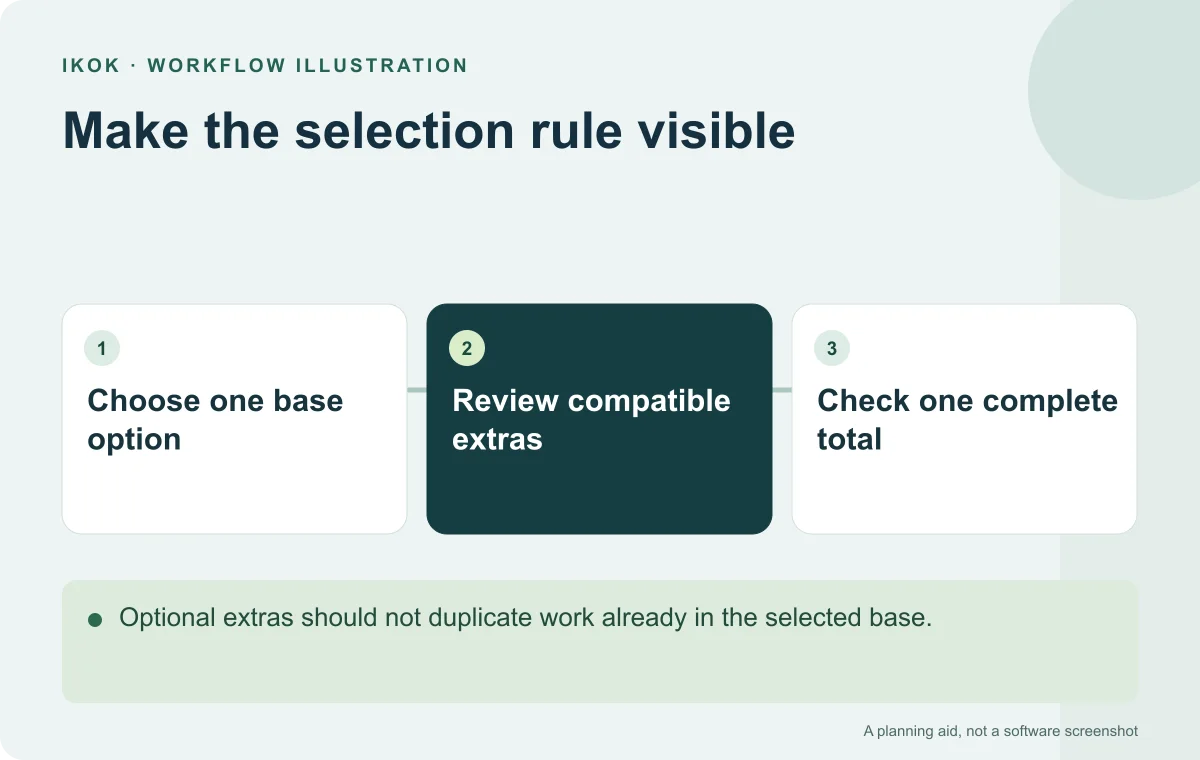
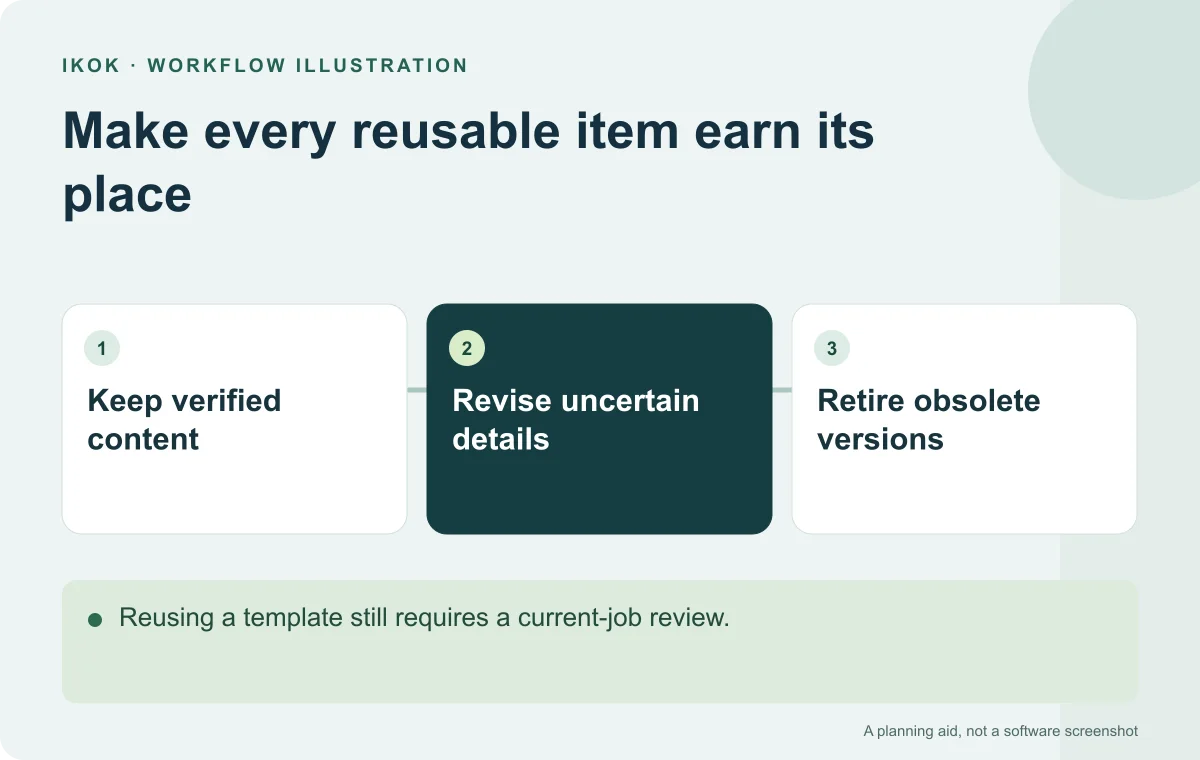
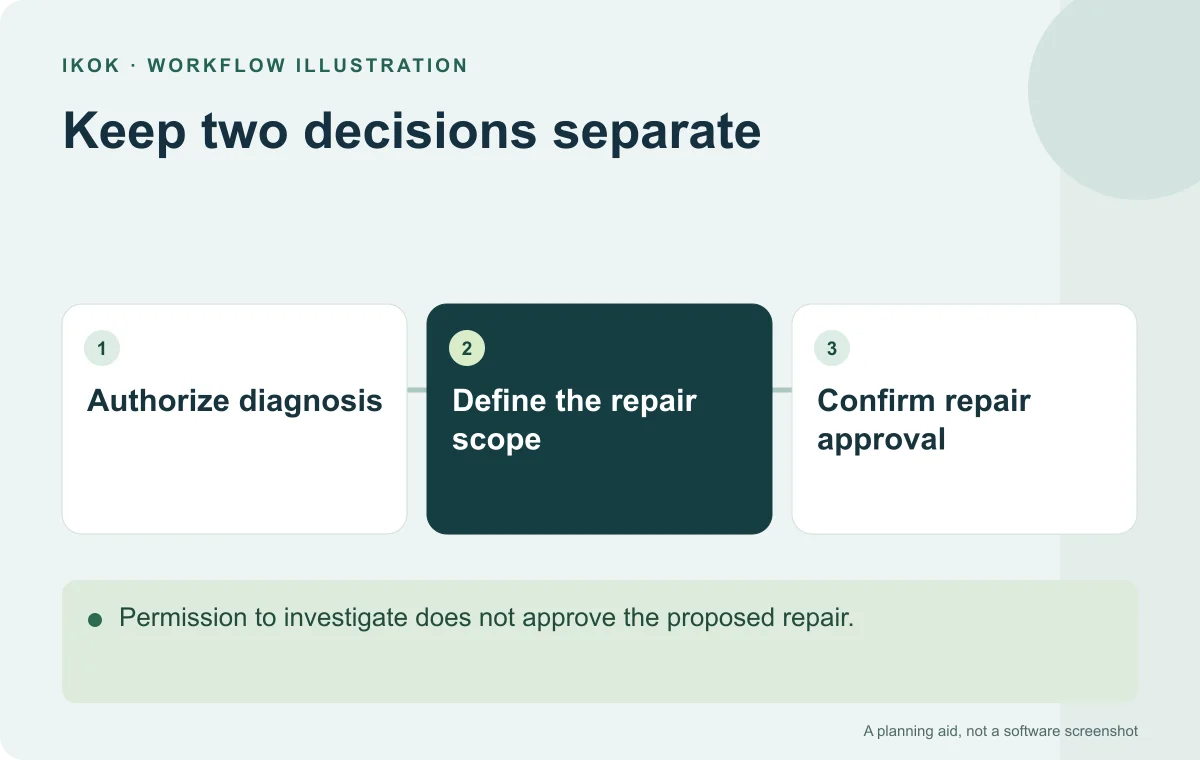
Photo: Original IKOK workflow illustration, November 23, 2026. A planning aid for the article; not a product screenshot or a record of an actual customer outcome.